The Key to The Dendera Zodiac
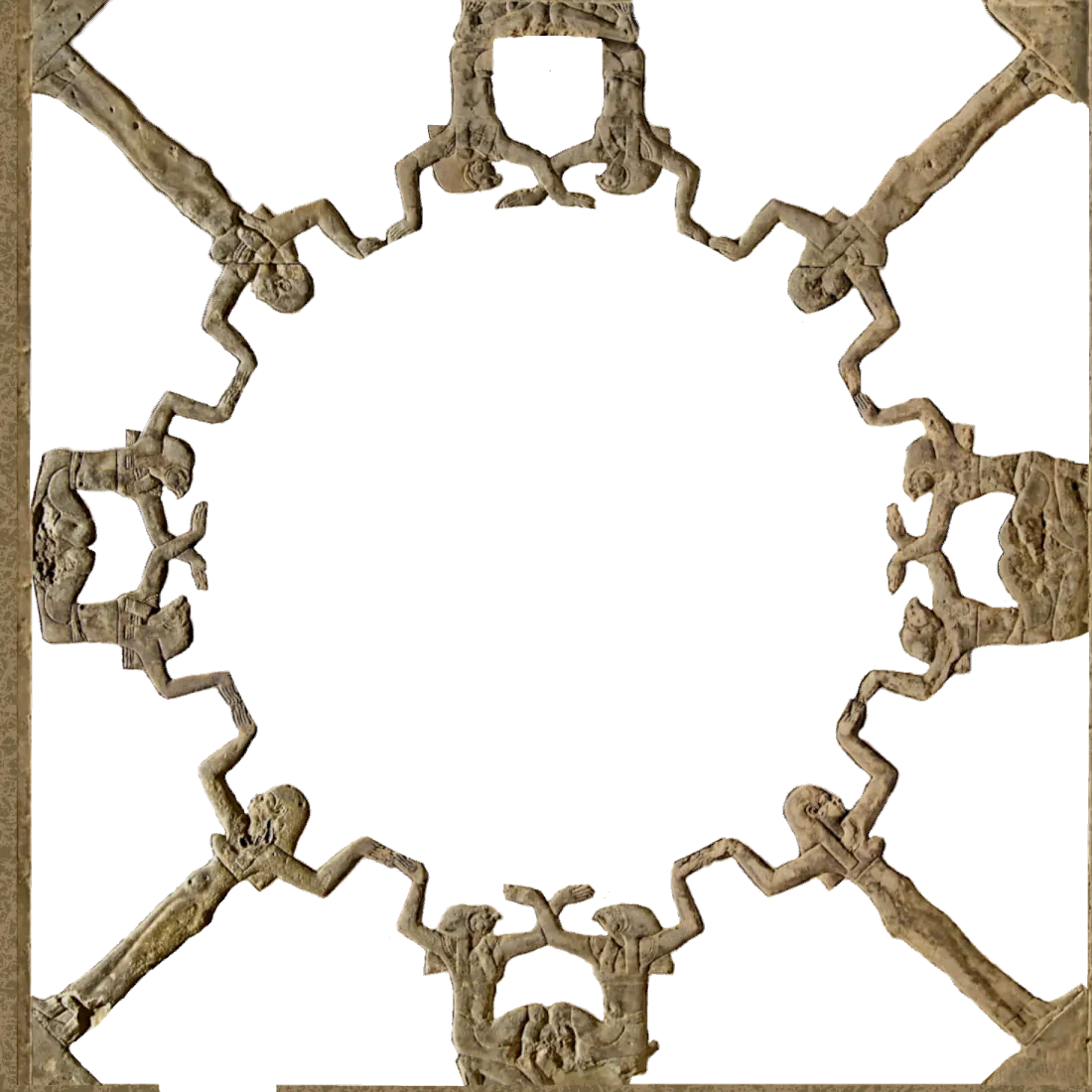
The missing piece to the Dendera Zodiac puzzle, which aligns with the knees of the falcon Gods on the right side of the illustration, is an artefact that comes from the lower northern shaft of the Great Pyramid of Giza.
This shaft was fully sealed up to the moment that its covering stone was broken opened in September 1872, and from inside the shaft a number of artefacts, including a small hook like object, were recovered.
This 'hook', which I shall call the 'Key', is now in the British Museum, is made from copper, and is composed of a stem
which splits at the top into two rounded metal hooks, these hooks being distinctly asymmetrical.
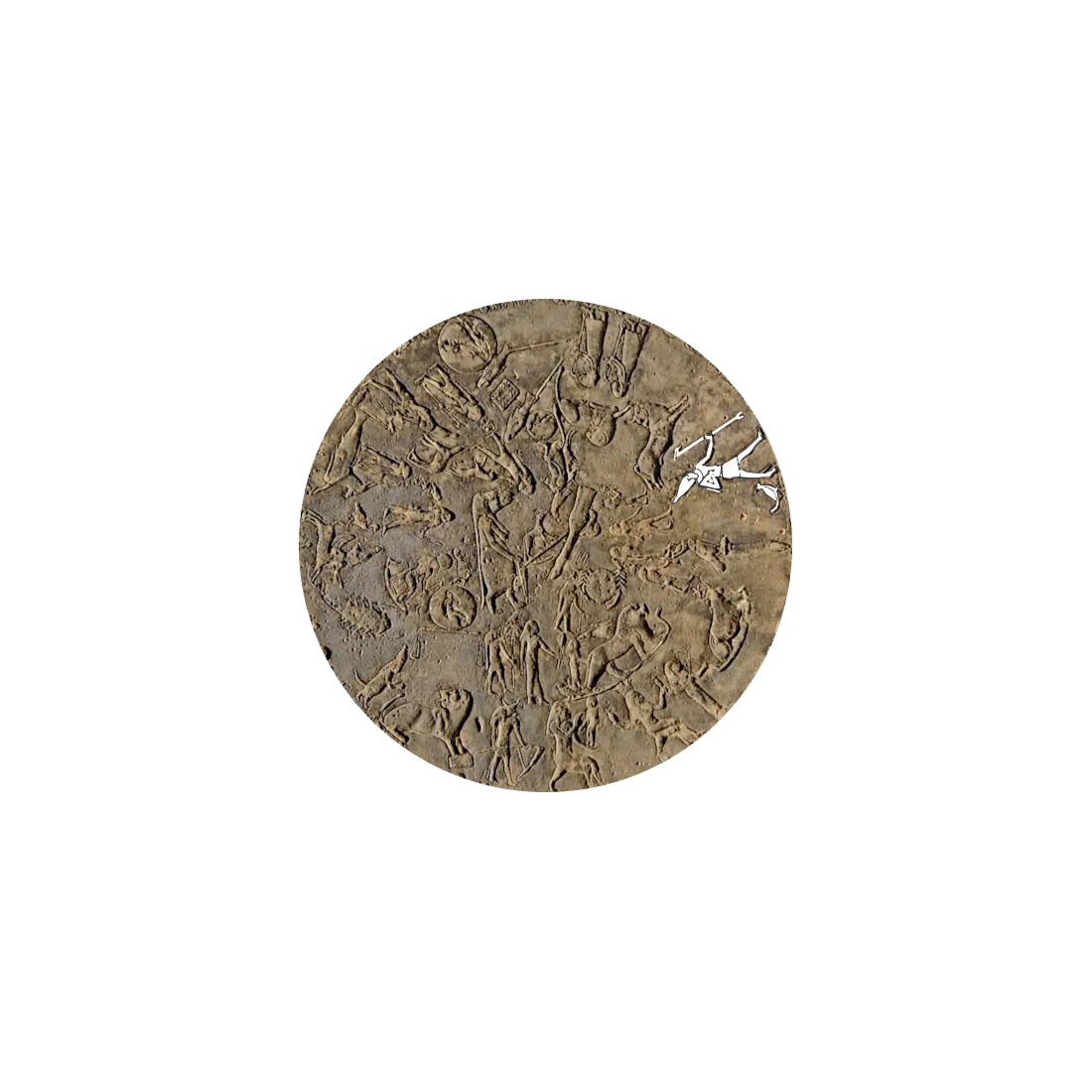
This Key artefact can be placed onto the knees of the falcon Gods on the right side of the Dendera Zodiac and fits to perfection, as can be seen by clicking the following button.
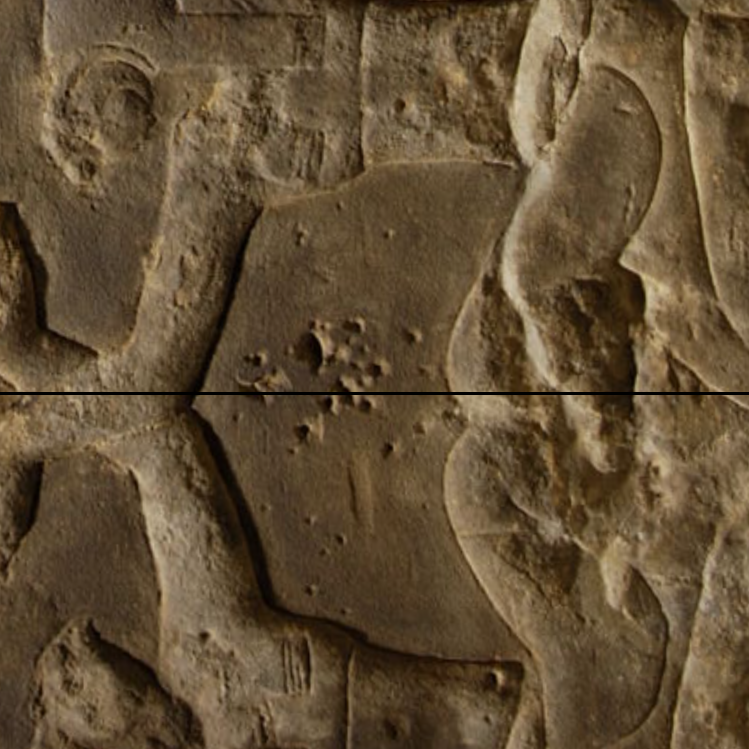
Illustration 1 - The Key, the knees of the falcon Gods on the right side of the image and the celestial axis line marked as a black line
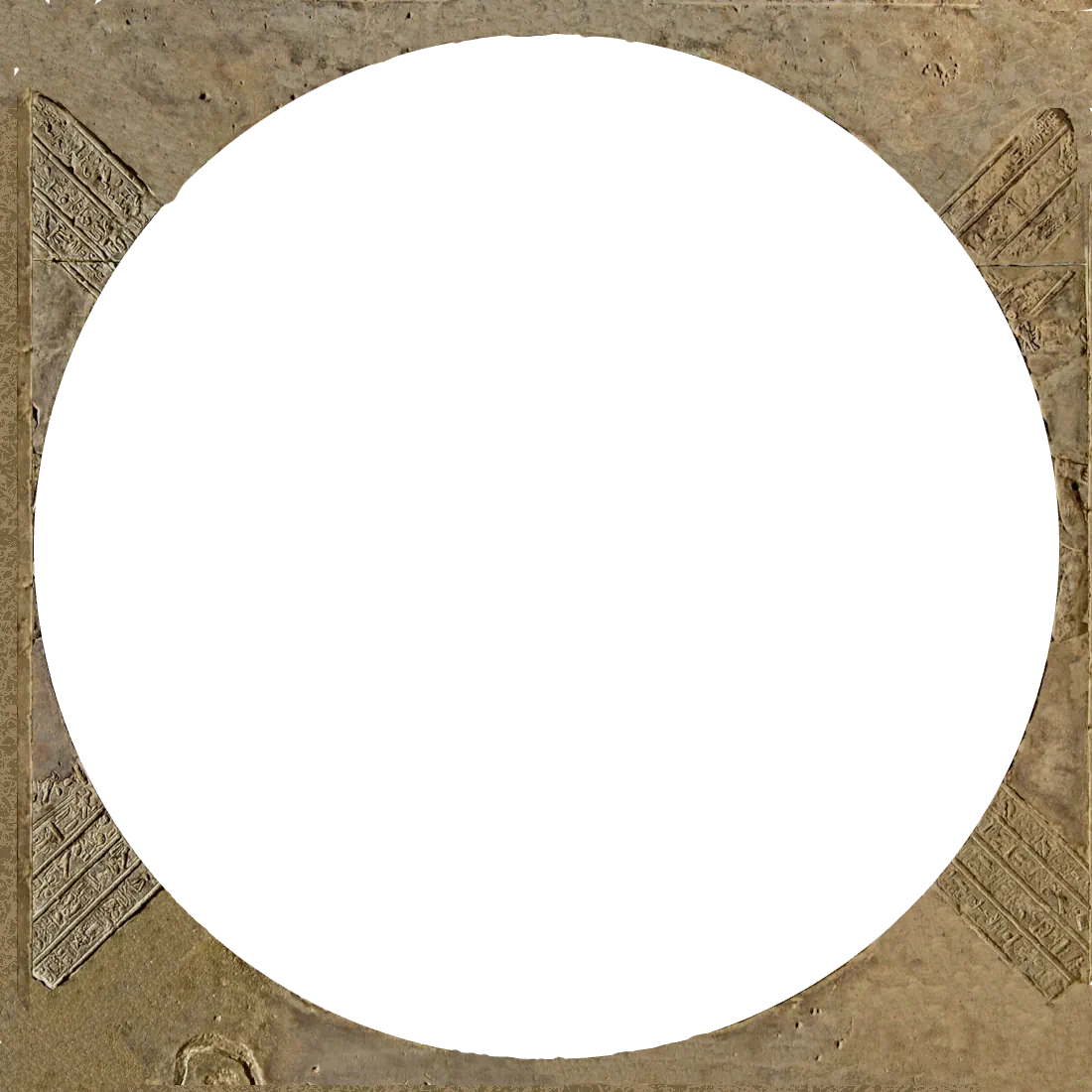
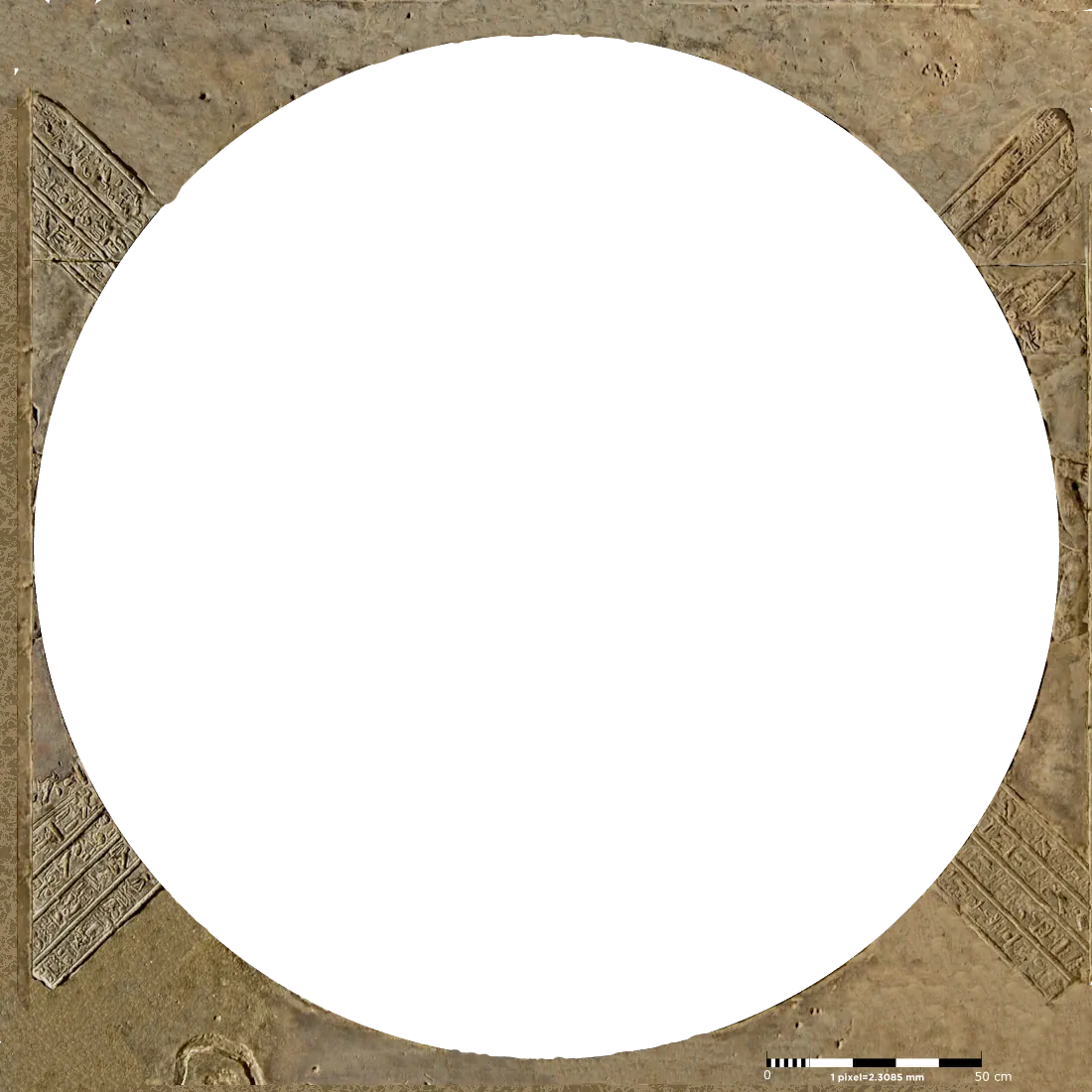
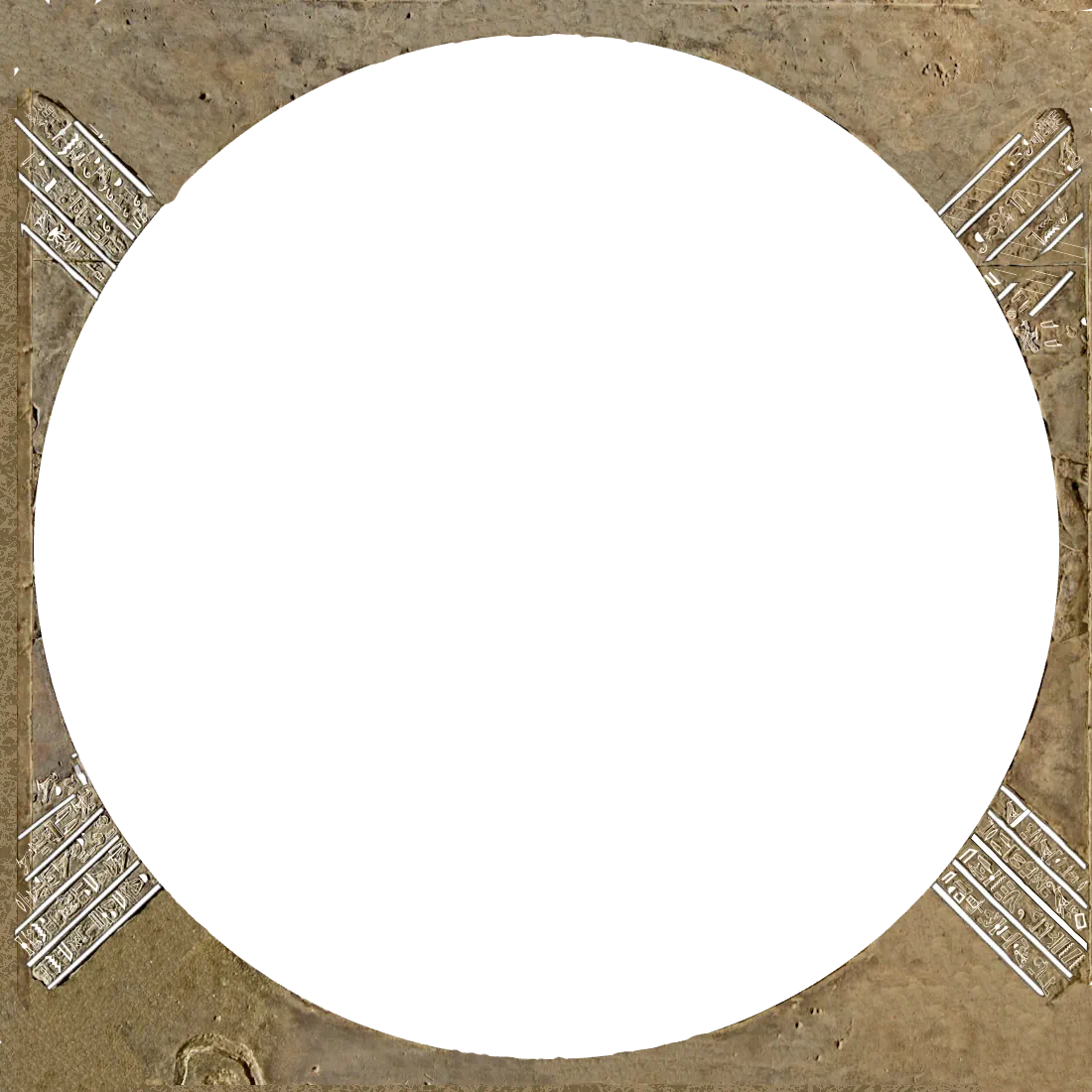
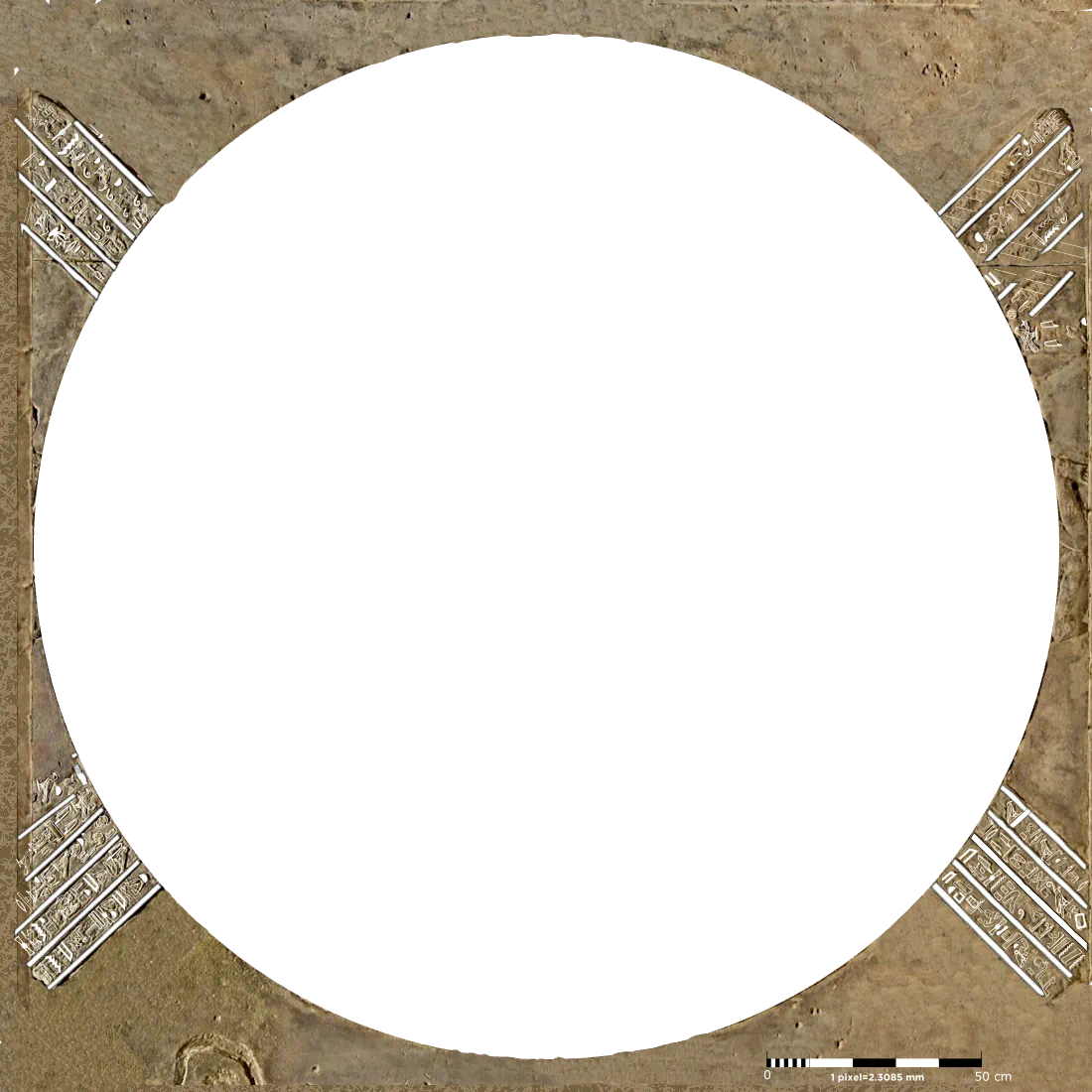
The Key's asymmetric curved parts align to perfection with the identically asymmetric knee carvings, with the Key needing to be enlarged by a scaling factor of 2.56:1 in order for the two objects to be superimposed as shown in the illustration. The visual correlation between the Key's shape and the Dendera Zodiac knee carvings is overwhelmingly obvious and only occurs on this one set of knees, with the other three possible locations on the knees of the three other sets of falcon Gods giving misalignments.
The alignment of the Great Pyramid's Key artefact with the Dendera Zodiac Gods knees is a simple task to perform, but has significant implications to it. The stonemasons who carved the Dendera Zodiac must have had full knowledge of the Key's design, and as the Key was only quite recently found behind a sealed section of stonework in the Great Pyramid, the Pyramid and the Zodiac must by contemporary. The Dendera Zodiac can therefore be dated to the epoch of the Great Pyramid circa 2700 B.C.E, which is known with certainty from radiocarbon dating. The second significant implication concerns the design, construction and functionality of the shaft in the Great Pyramid where the Key artefact was hidden.
It has been determined with certainty that the lower northern shaft of the Great Pyramid is also a sophisticated geometry puzzle which, when solved, gives a precise value of the axial tilt of the Earth of 23.996068848986106°. The date and time at which this axial tilt value occurred can be computed using an astronomy formula known as 'Laskar's axial tilt formula' and then that date can be looked up on NASA's high precision long term ephemeris tables to determine that the event being presented in the Great Pyramid is that of the "geometric winter solstice" on January 14th 2729 BCE at 17:29:26 TDB. The full analysis of that mathematical derivation can be found here.
It is important to define what is meant by "geometric winter solstice", because it is not a standard term that is used in classical astronomy. It is the moment in time when the Earth's north pole position angle, when viewed from The Sun, is zero degrees i.e. the north pole is pointing directly away from The Sun. This is not the same as the classical definition of the Winter Solstice which is specified as being the moment in time when the geocentric right ascension of The Sun is 270°. The classical Winter Solstice occurred on January 11th 2729 BCE at 10:36:47 TDB.
The Key is therefore a representation of the date of the geometric winter solstice and provides a precise time and date mechanism for determining when the positions of the celestial bodies on the carving were recorded.
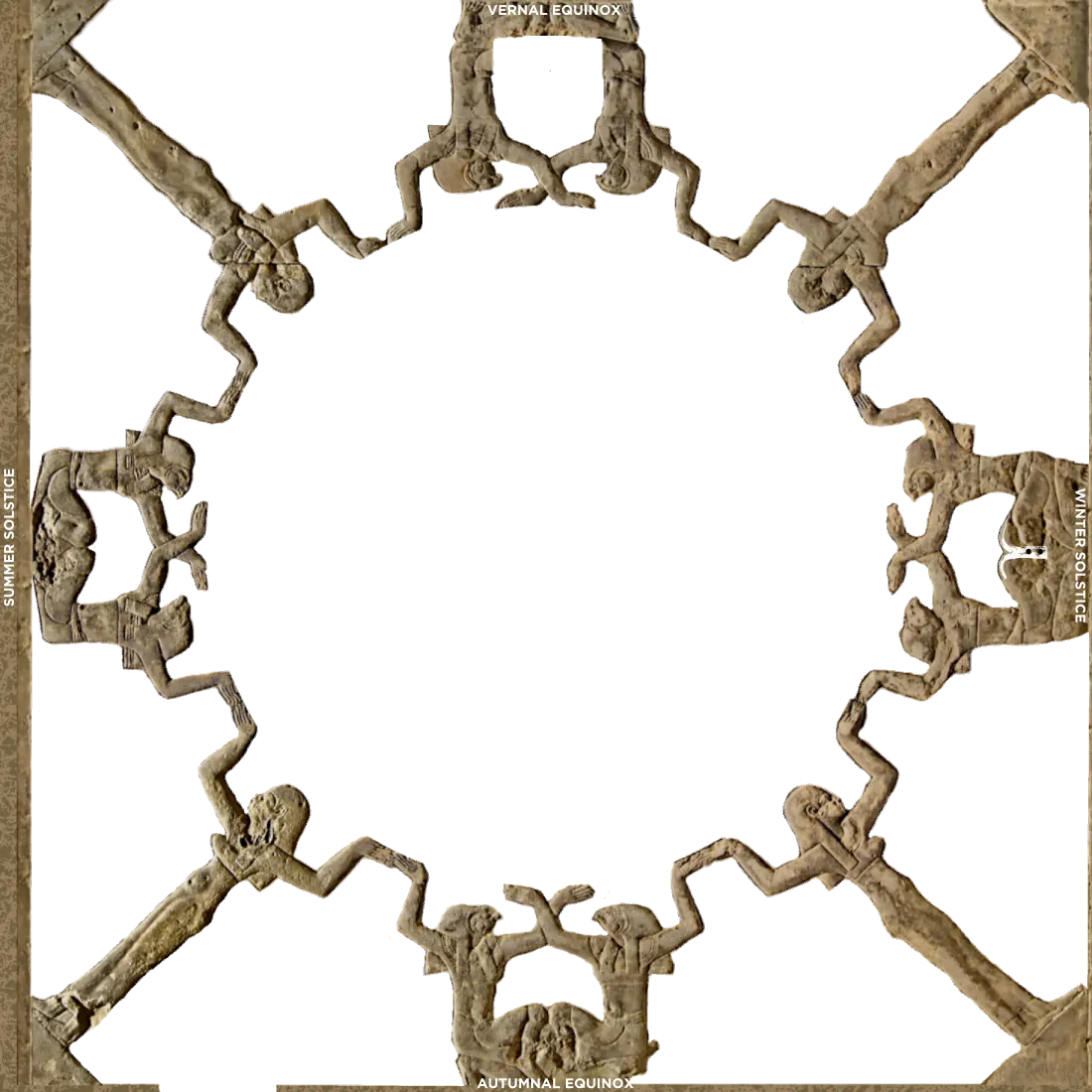
By placing the Key onto the knees of the Gods on the right side of the carving, and because the vernal equinox has already been determined as being at the top of the carving and the geometric winter solstice is now known to be on the right, the four equinox and solstice locations can correctly be added to the illustration.
If you look at the relative position of the equinoxes and solstices you can see that the passage of time in this reference frame is anti-clockwise and contradicts that which was established on the previous page when the hieroglyph carvings of the zodiac were analysed. This is a deliberate and highly significant part of the puzzle's design: in realm of the Gods on the outer square frame, time is running backwards.
The date of this geometric winter solstice from the Great Pyramid, January 14th 2729 BCE 17:29:26 TDB, can be verified as being correct by solving the next stage of the Dendera Zodiac puzzle. In the hieroglyph instructions that were translated on the previous page it is clearly stated that there are three planets in conjunction on the sculpture (phrase 4) and also that the planet Venus is located in the Orion constellation (phrase 5). Therefore if the positions of the planets are read from the NASA DE441 ephemeris tables for this date, they must show the three planet conjunction and the planet Venus must end up being positioned in line with the God Sah, the God linked with the Orion constellation, on the inner stone ring of hieroglyphs. If a correlation between the modern data and the ancient data from the Great Pyramid and the Denderda Zodiac is found during this analysis then the date from the puzzles in both of the buildings can be declared as having been correctly solved.
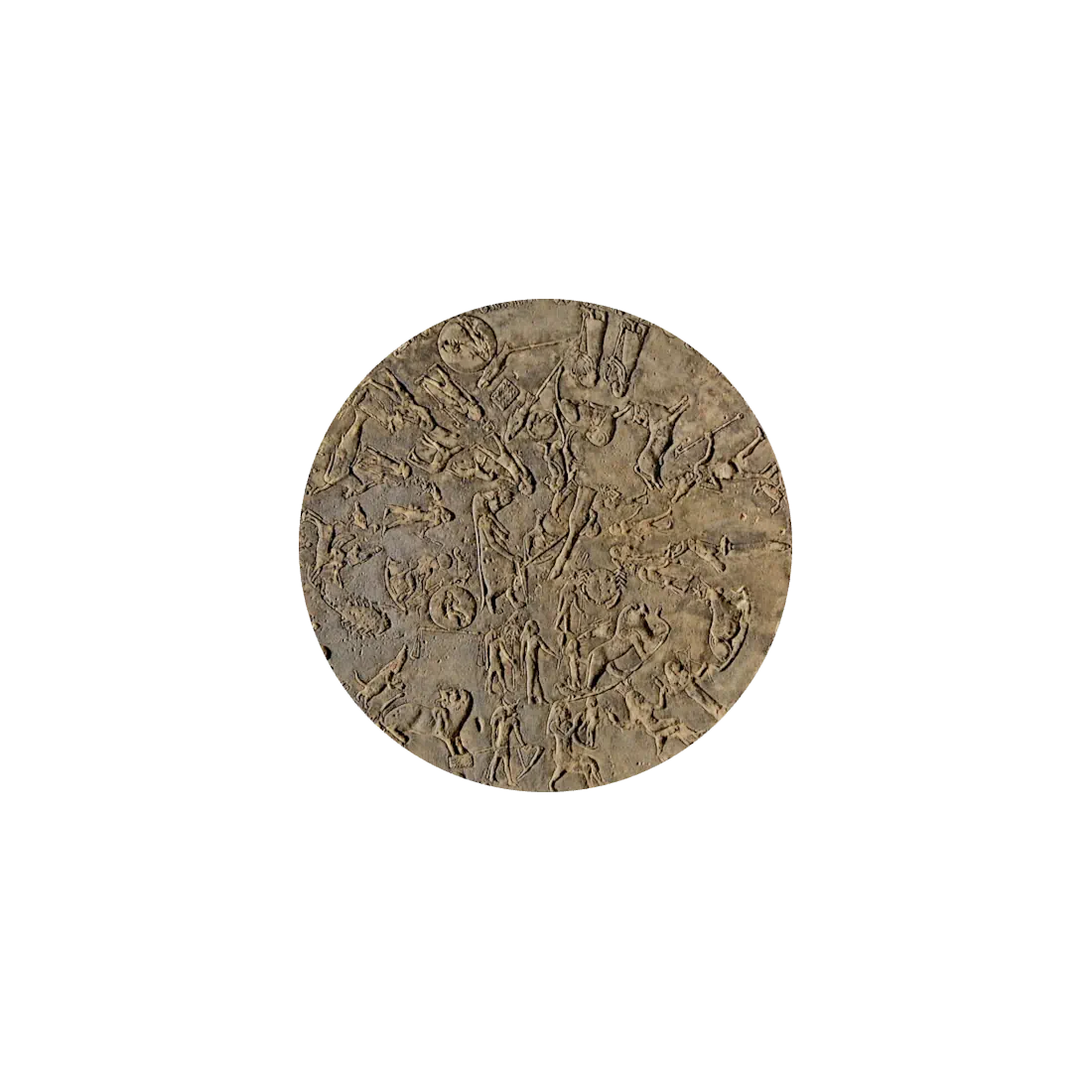
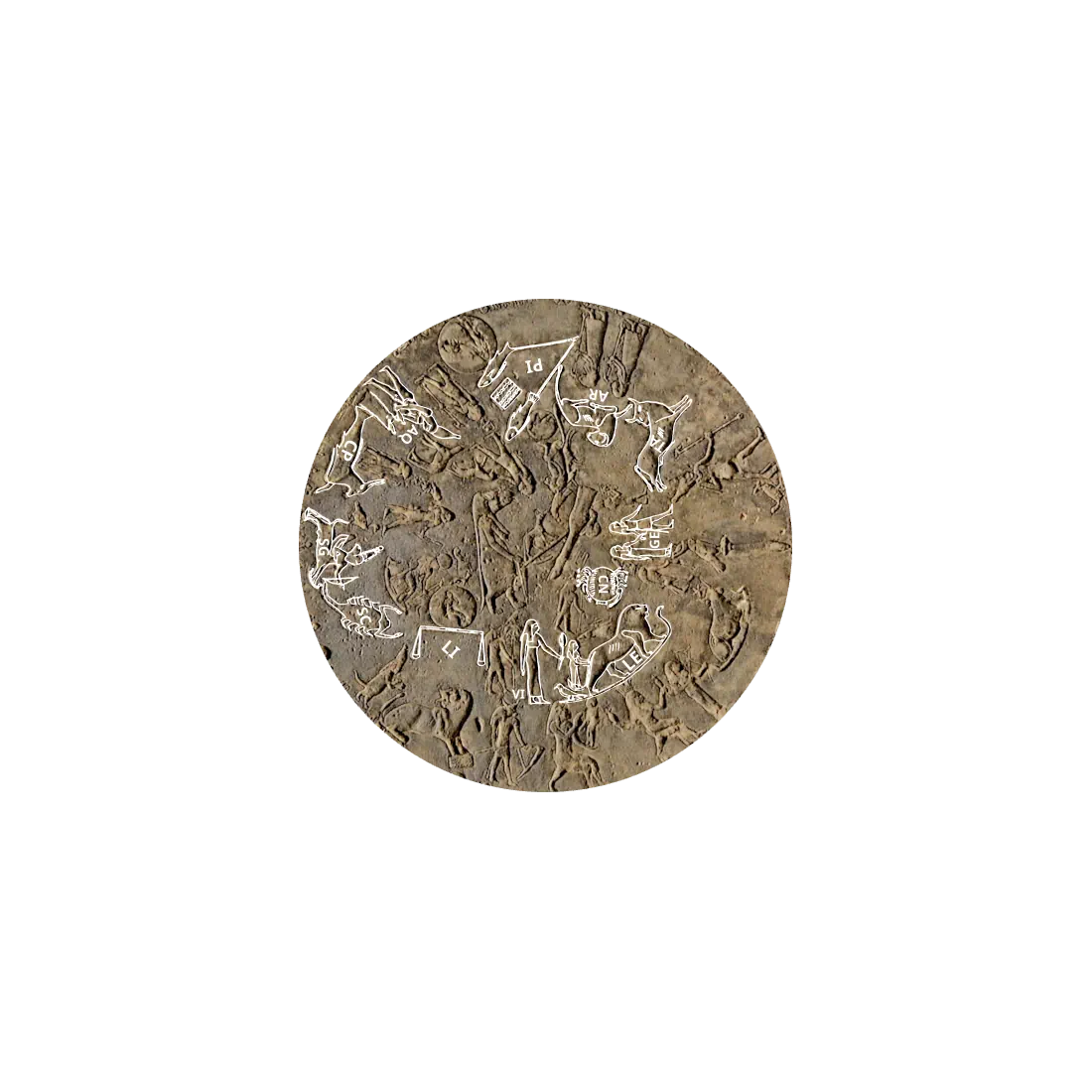
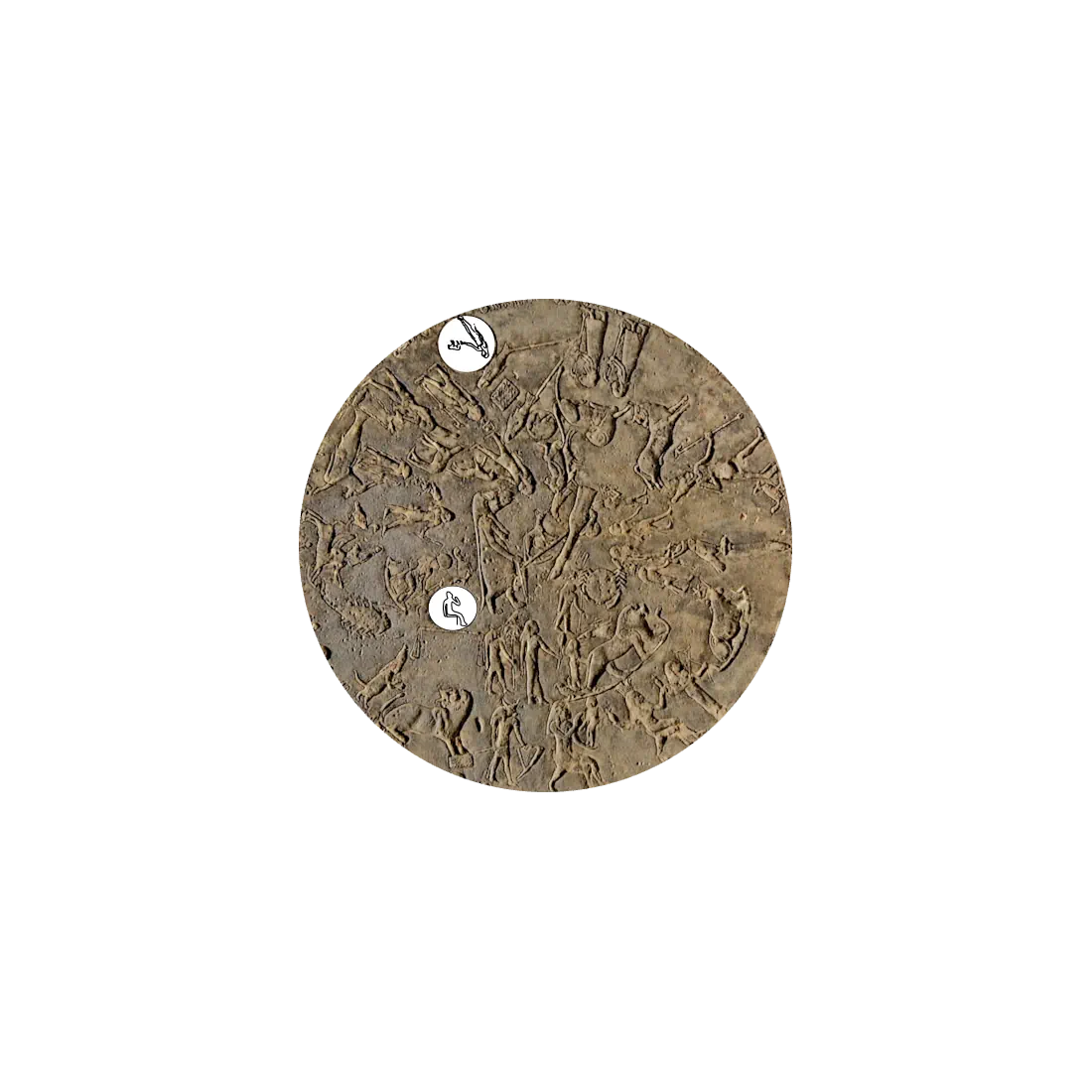
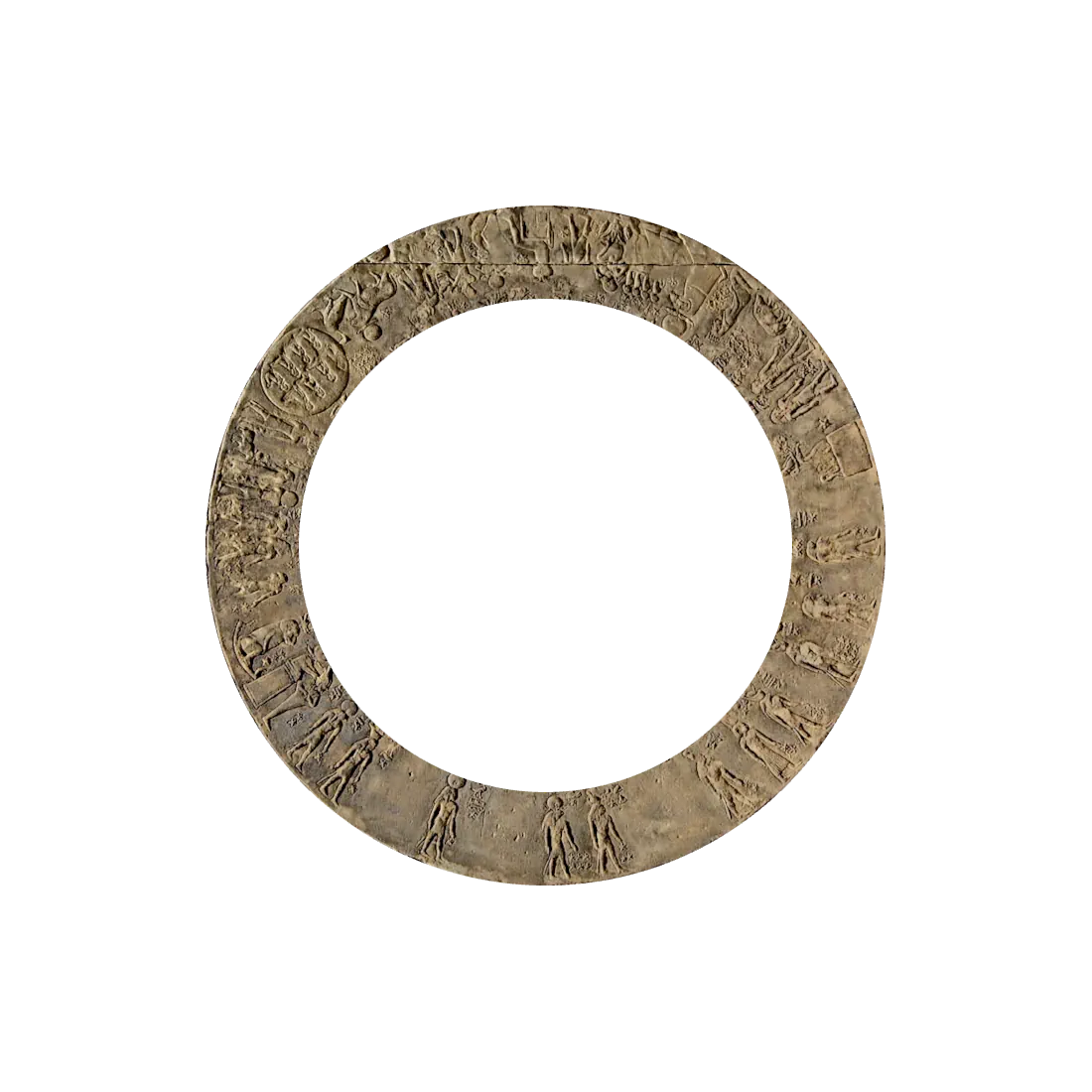
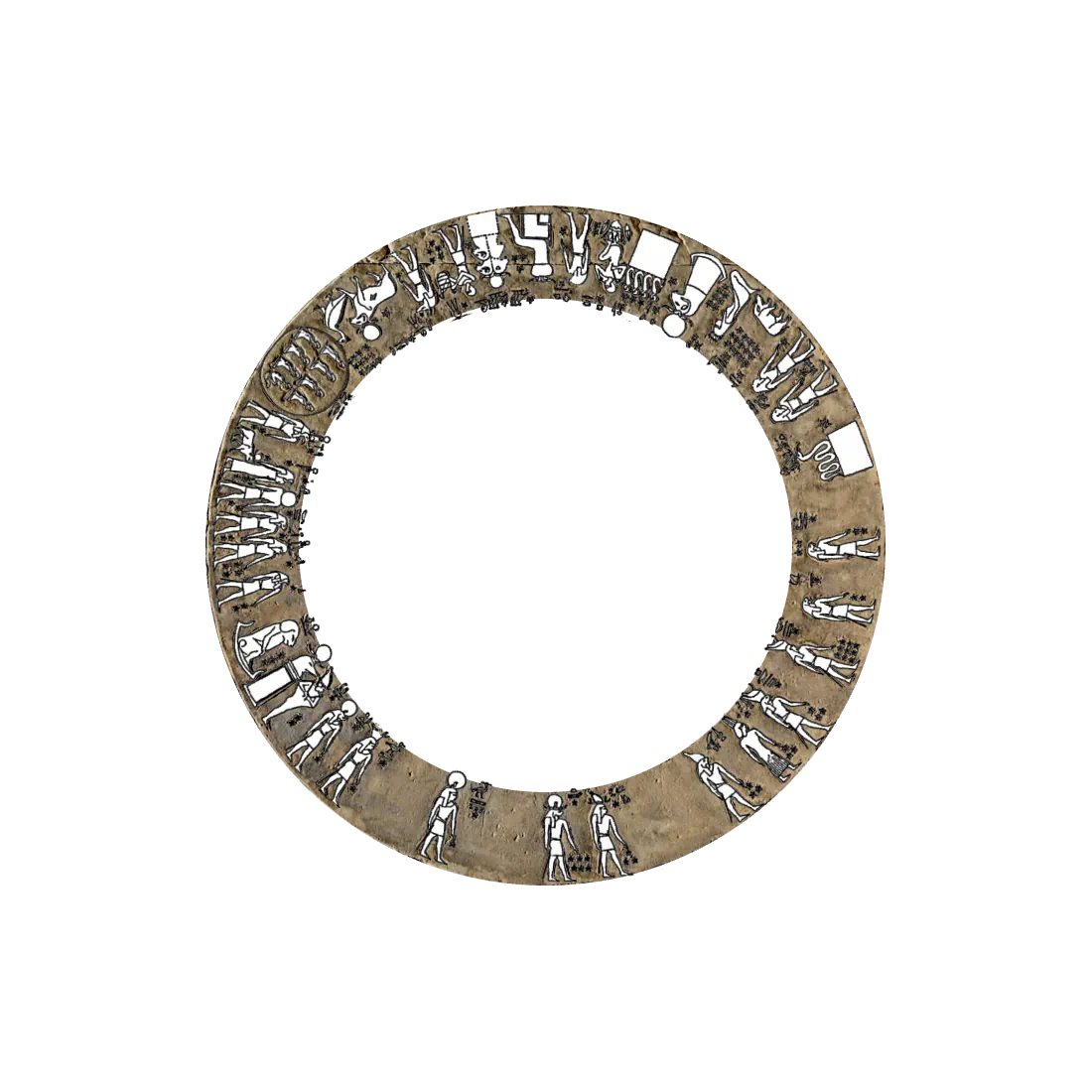
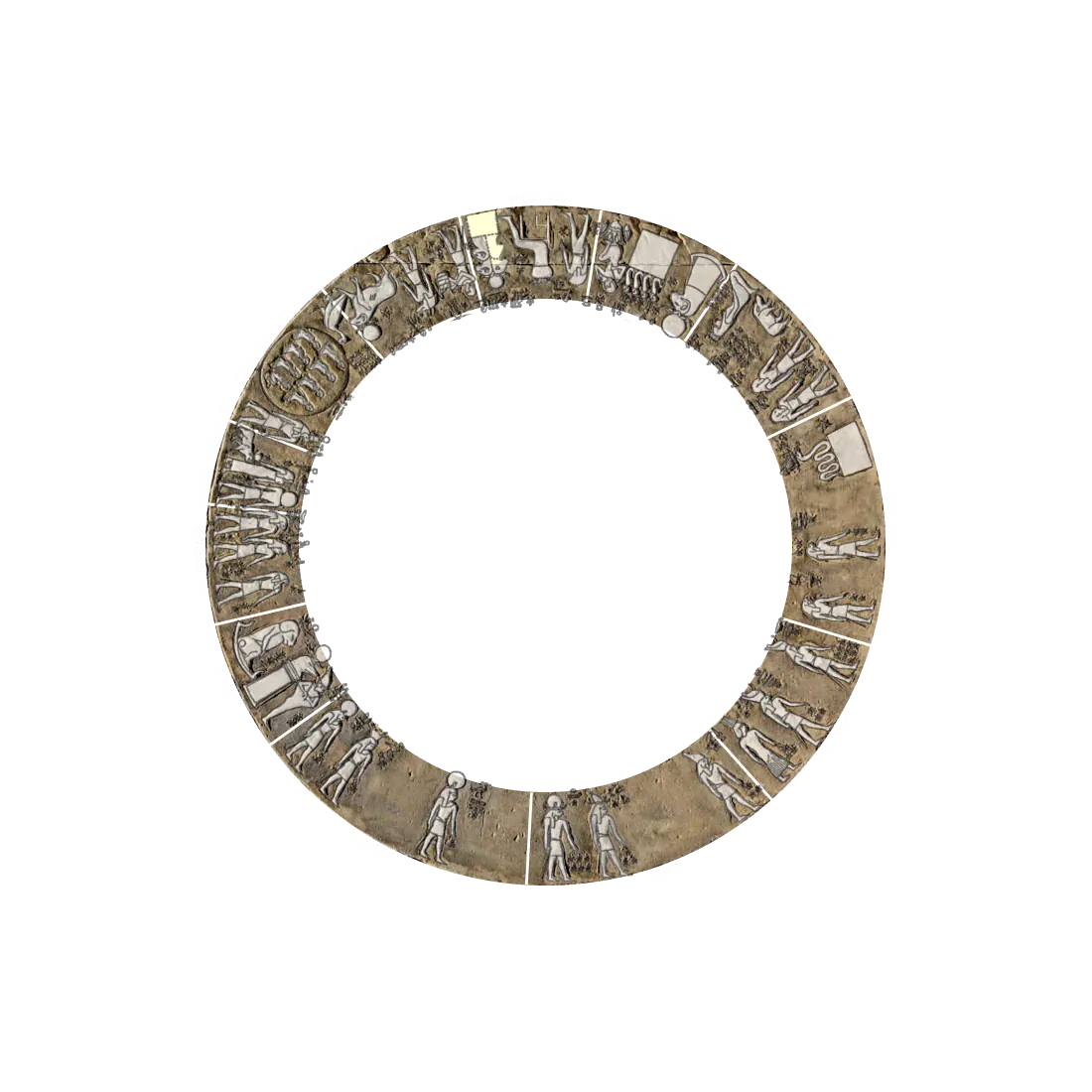
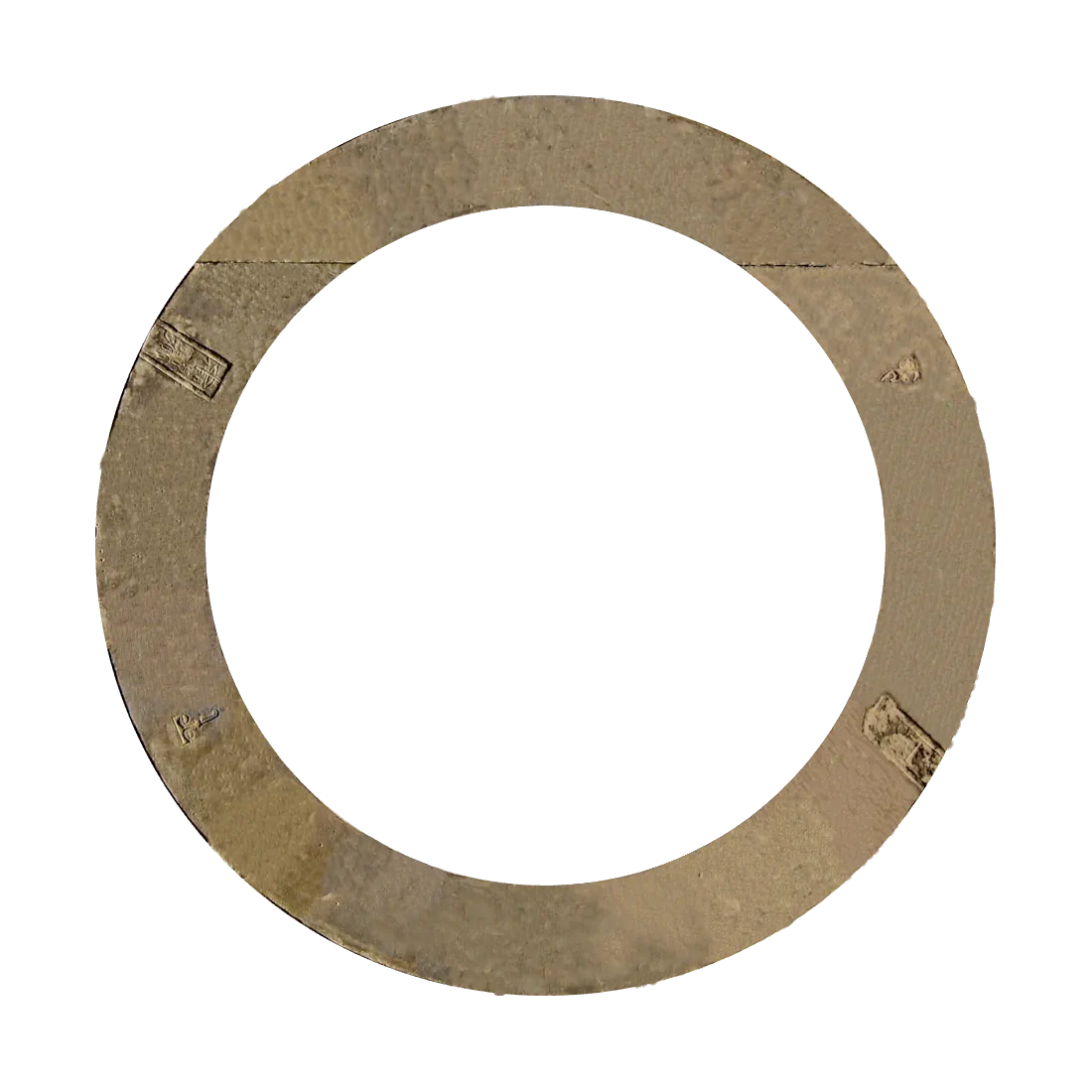
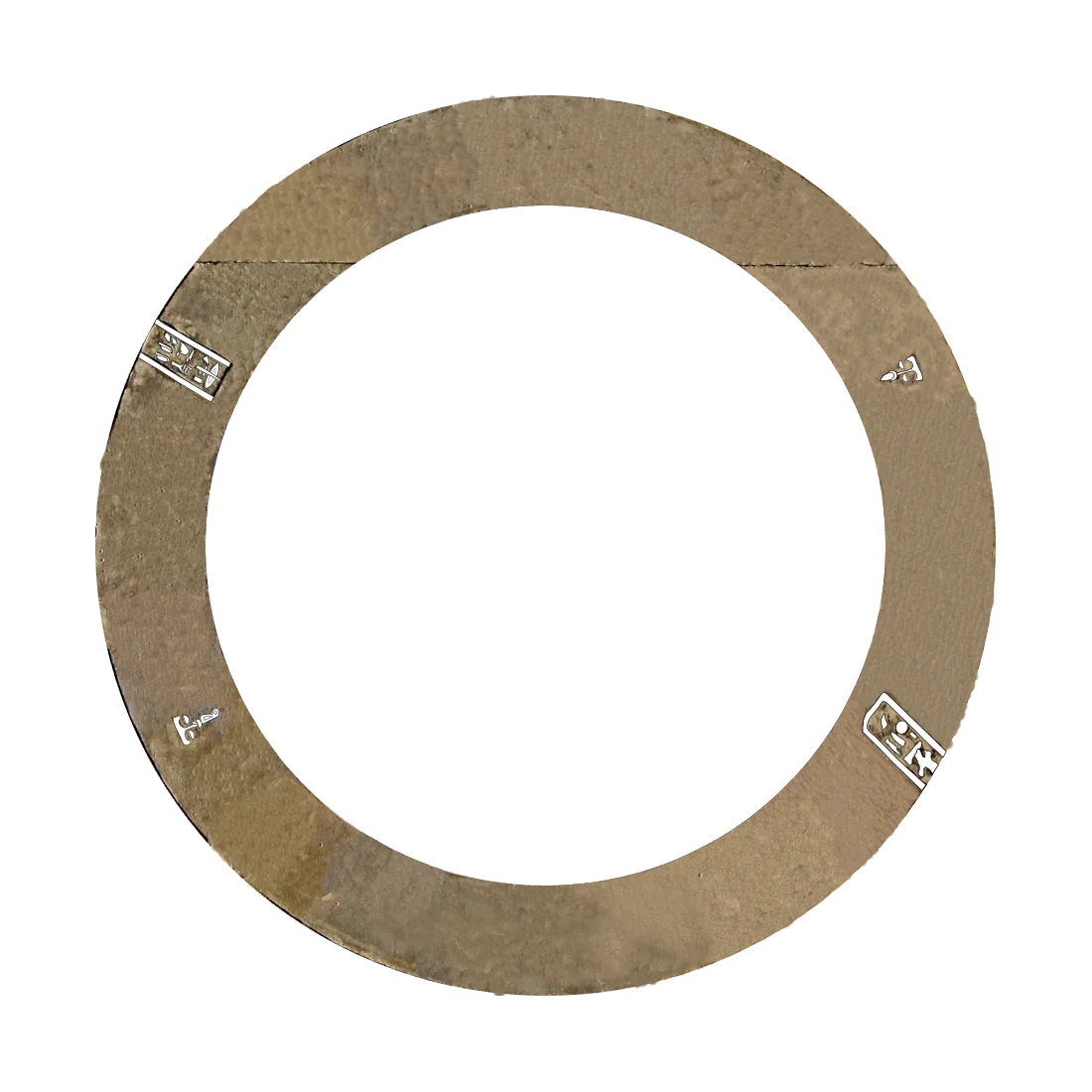
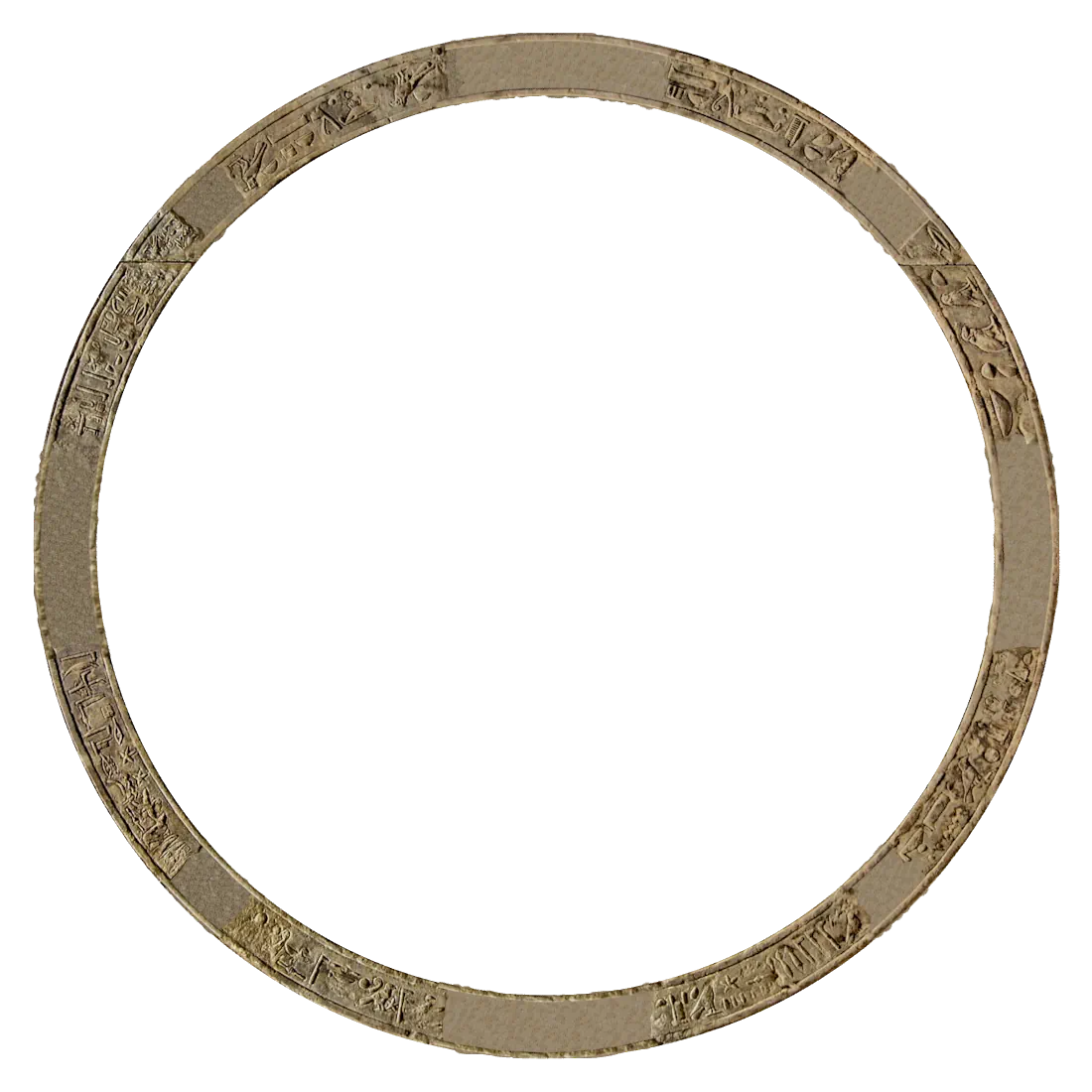
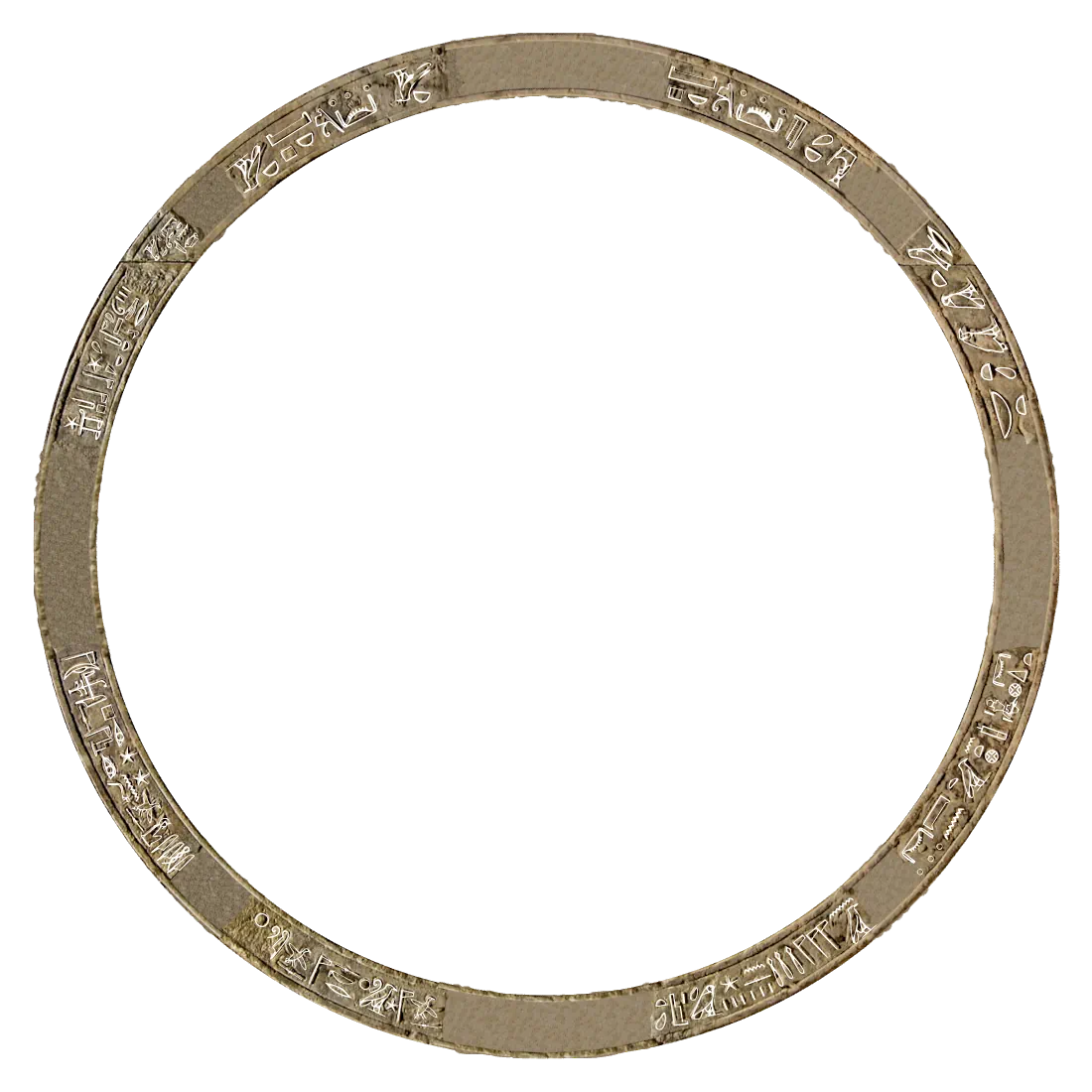
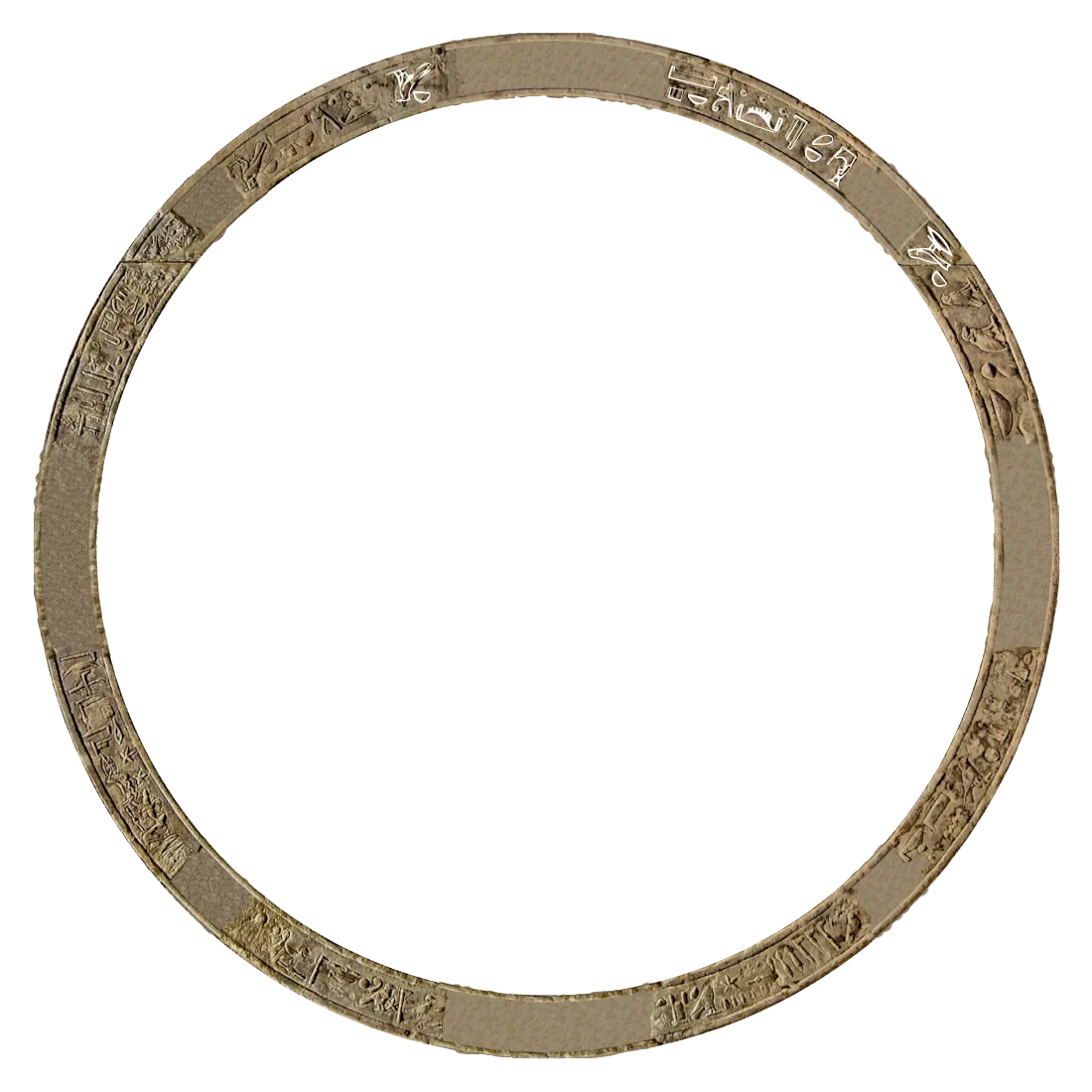
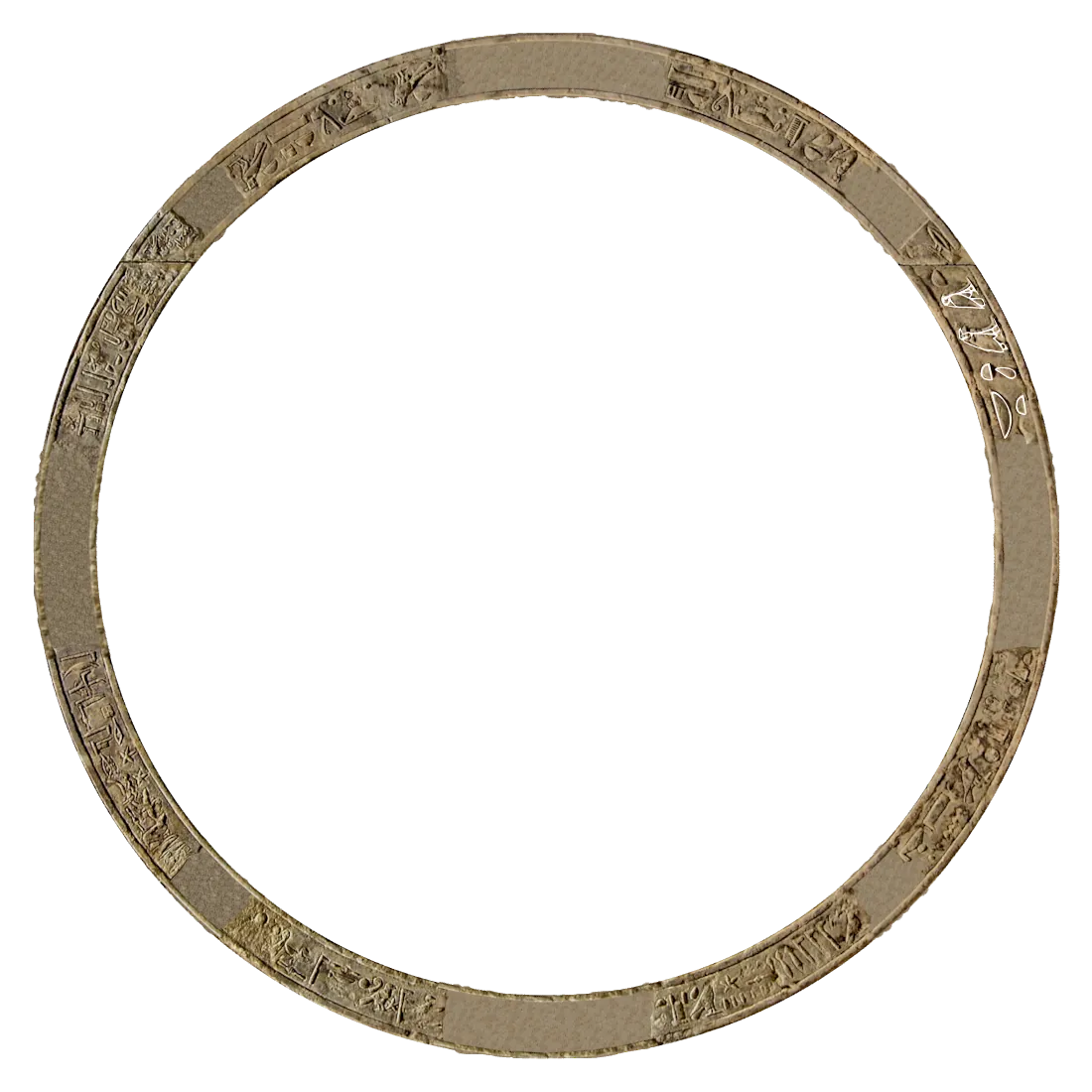
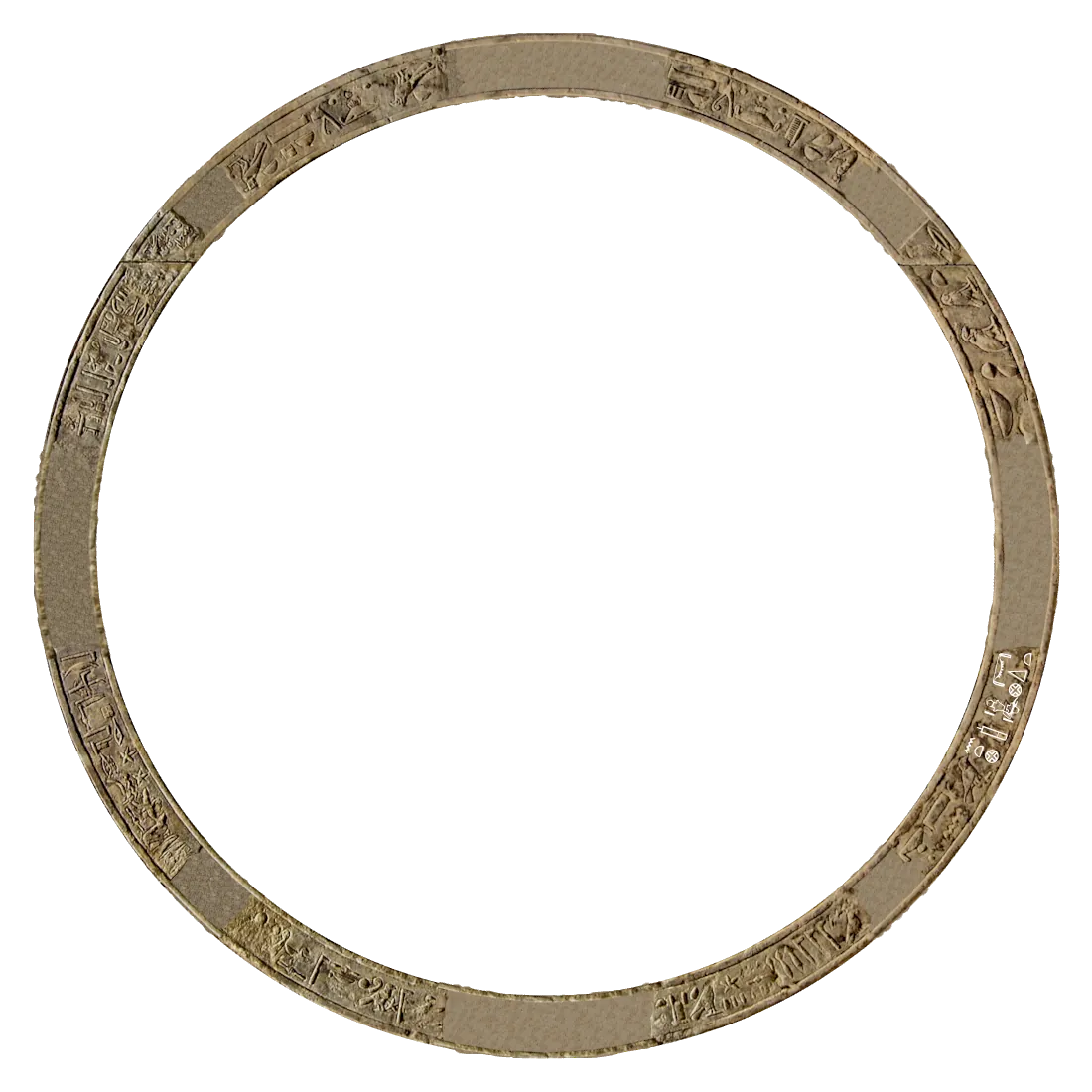
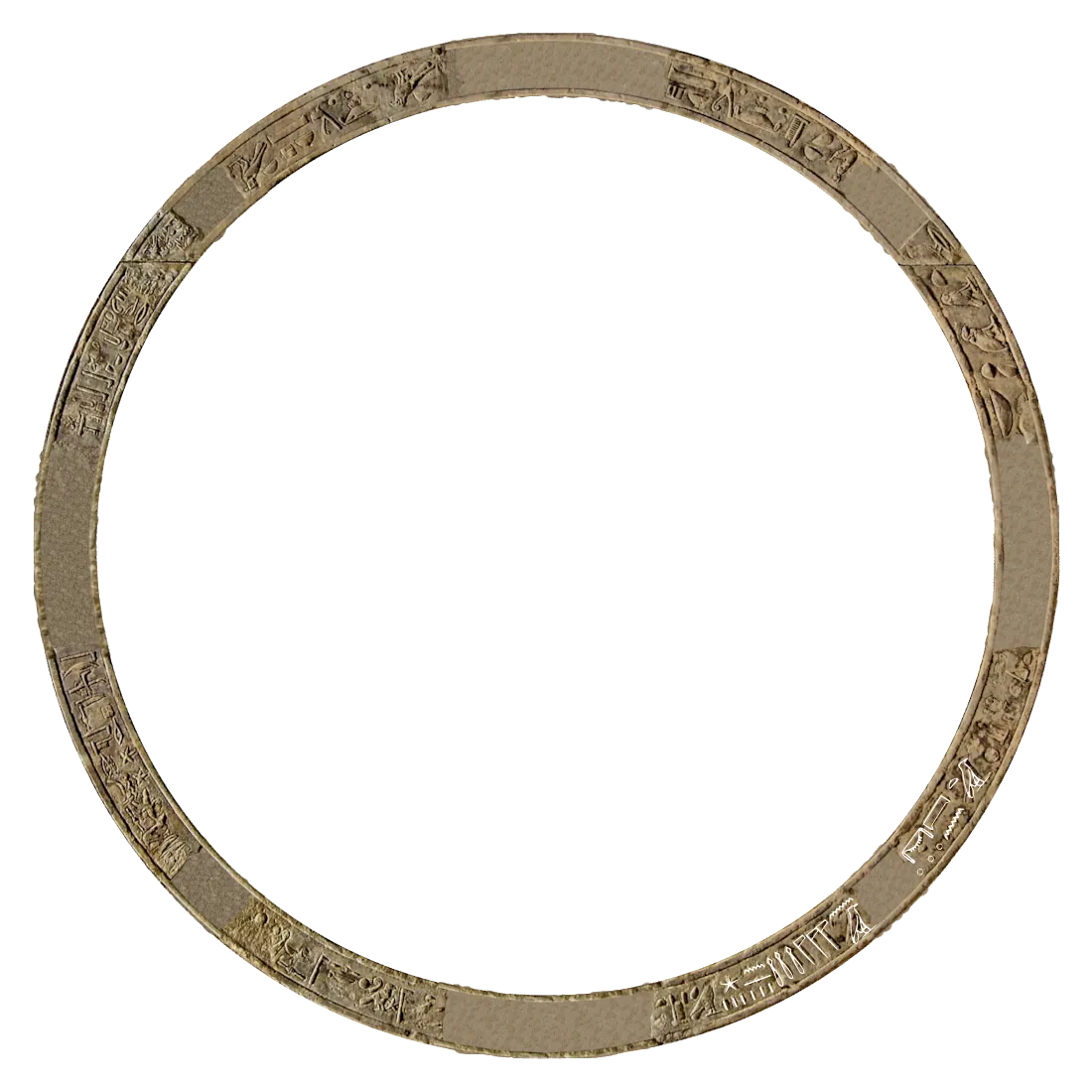
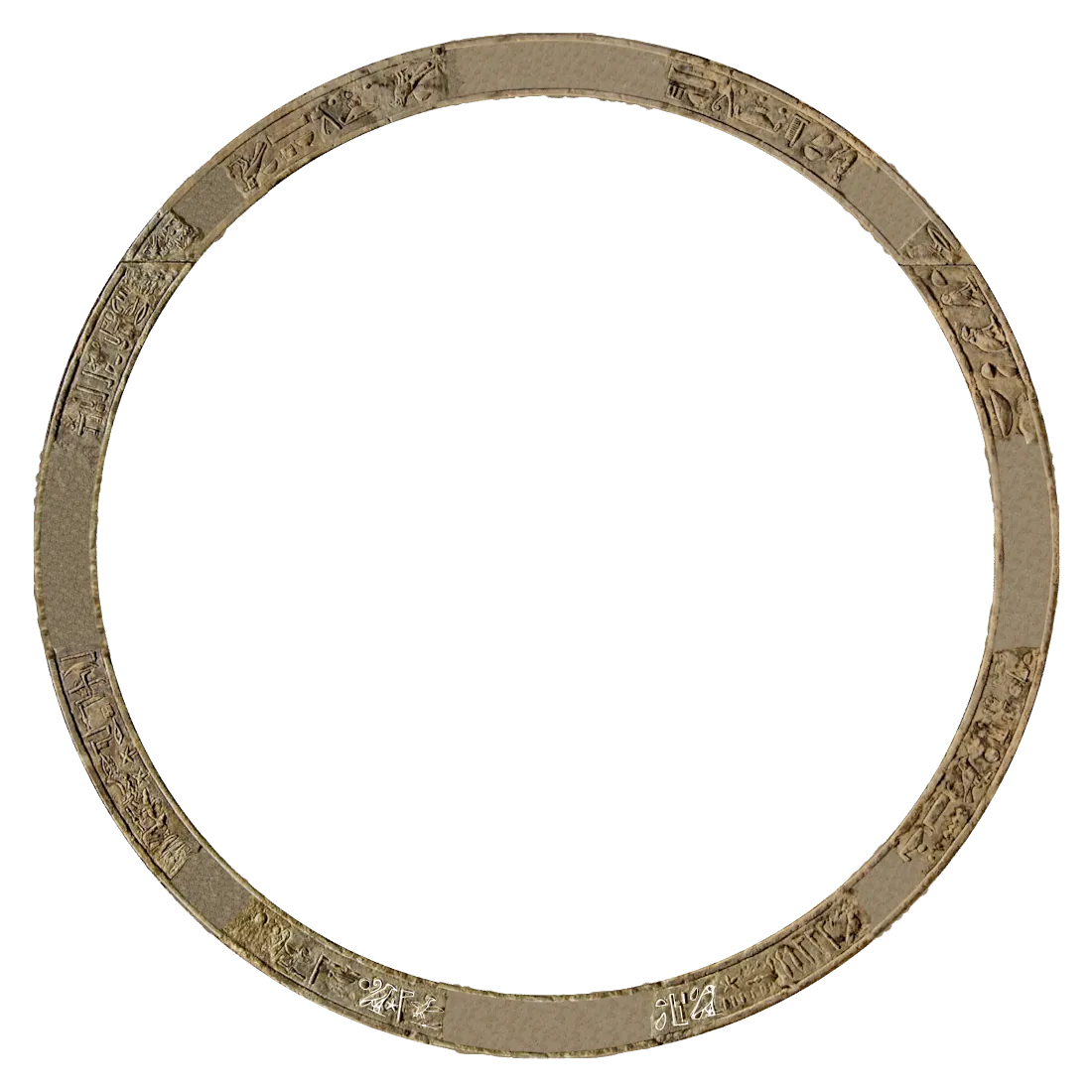
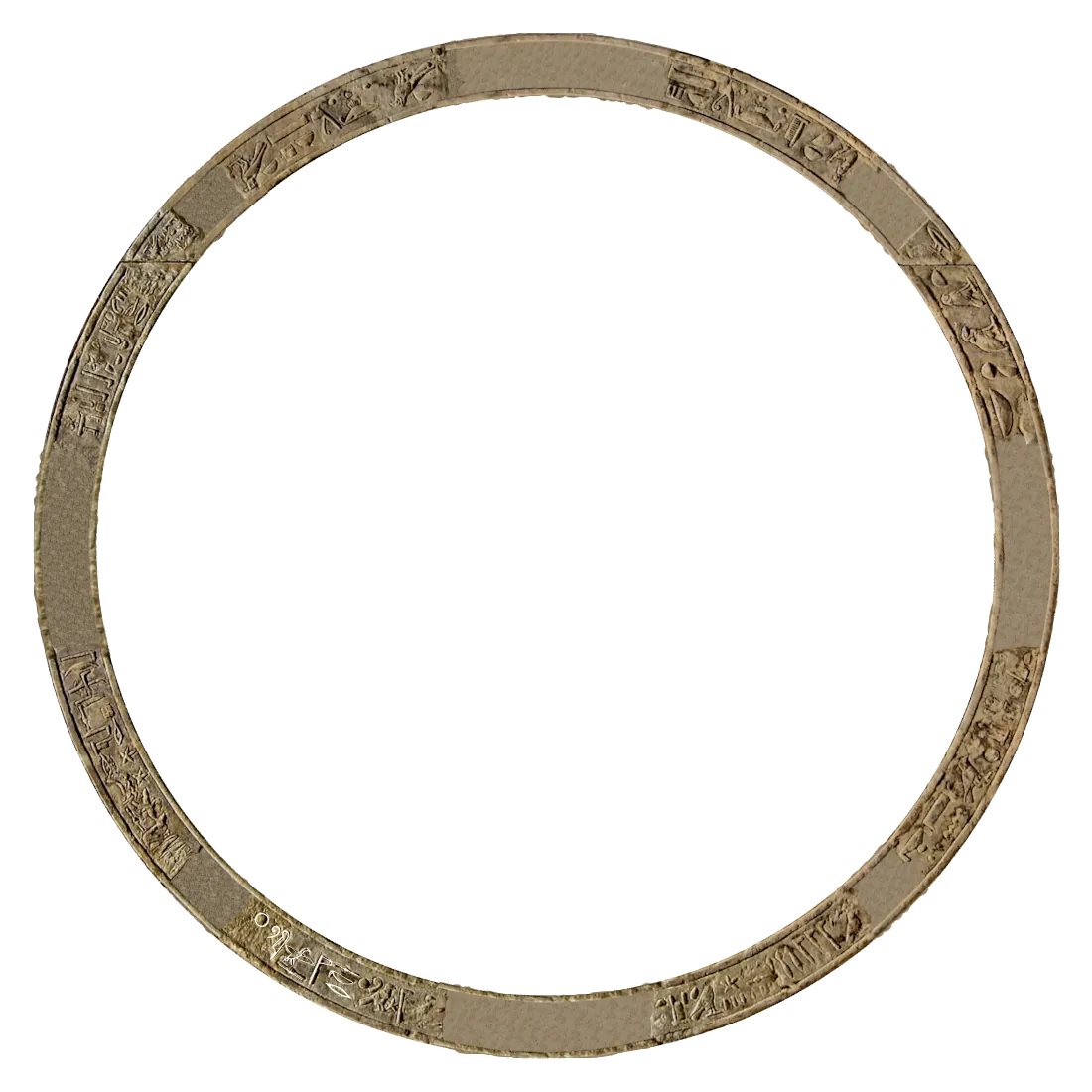
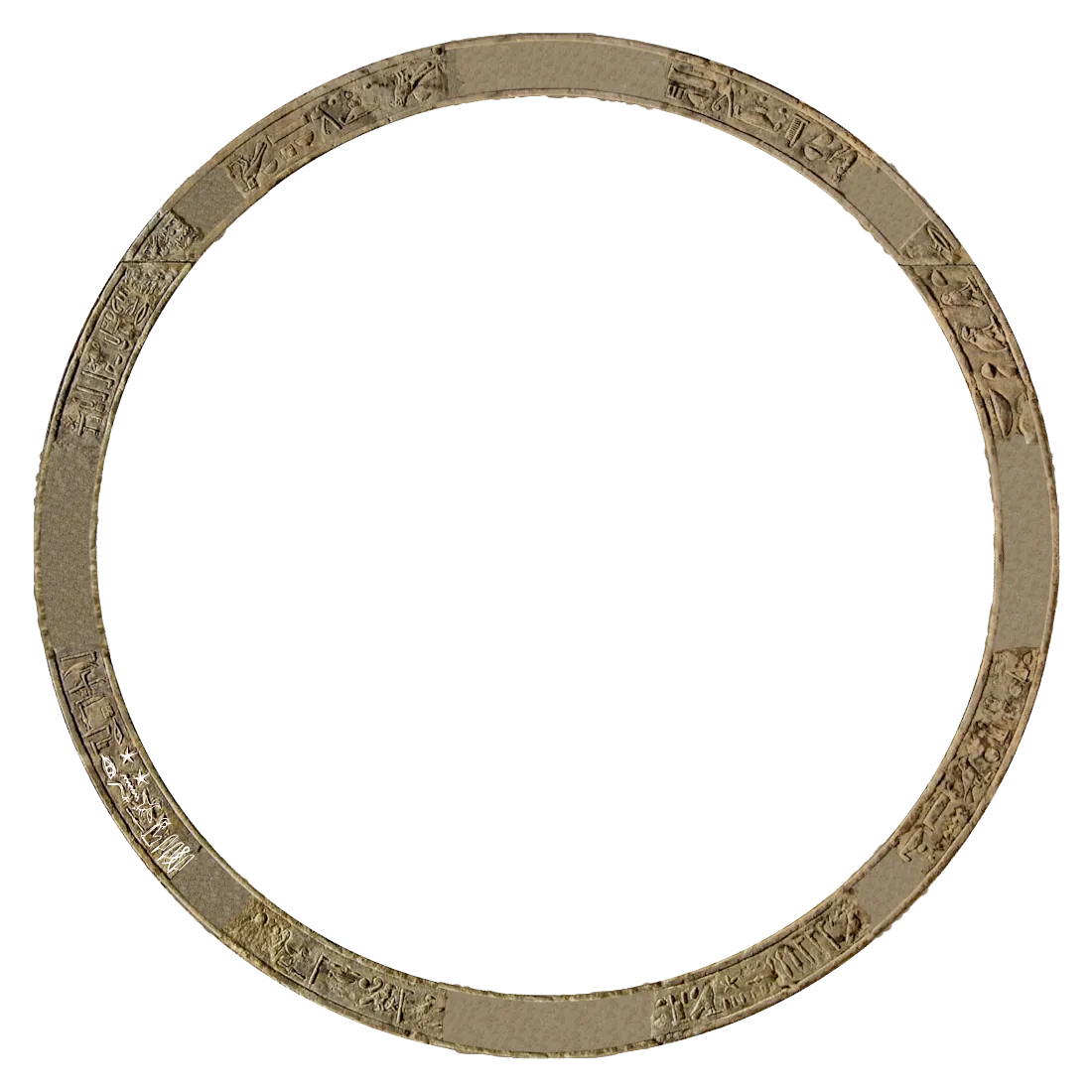
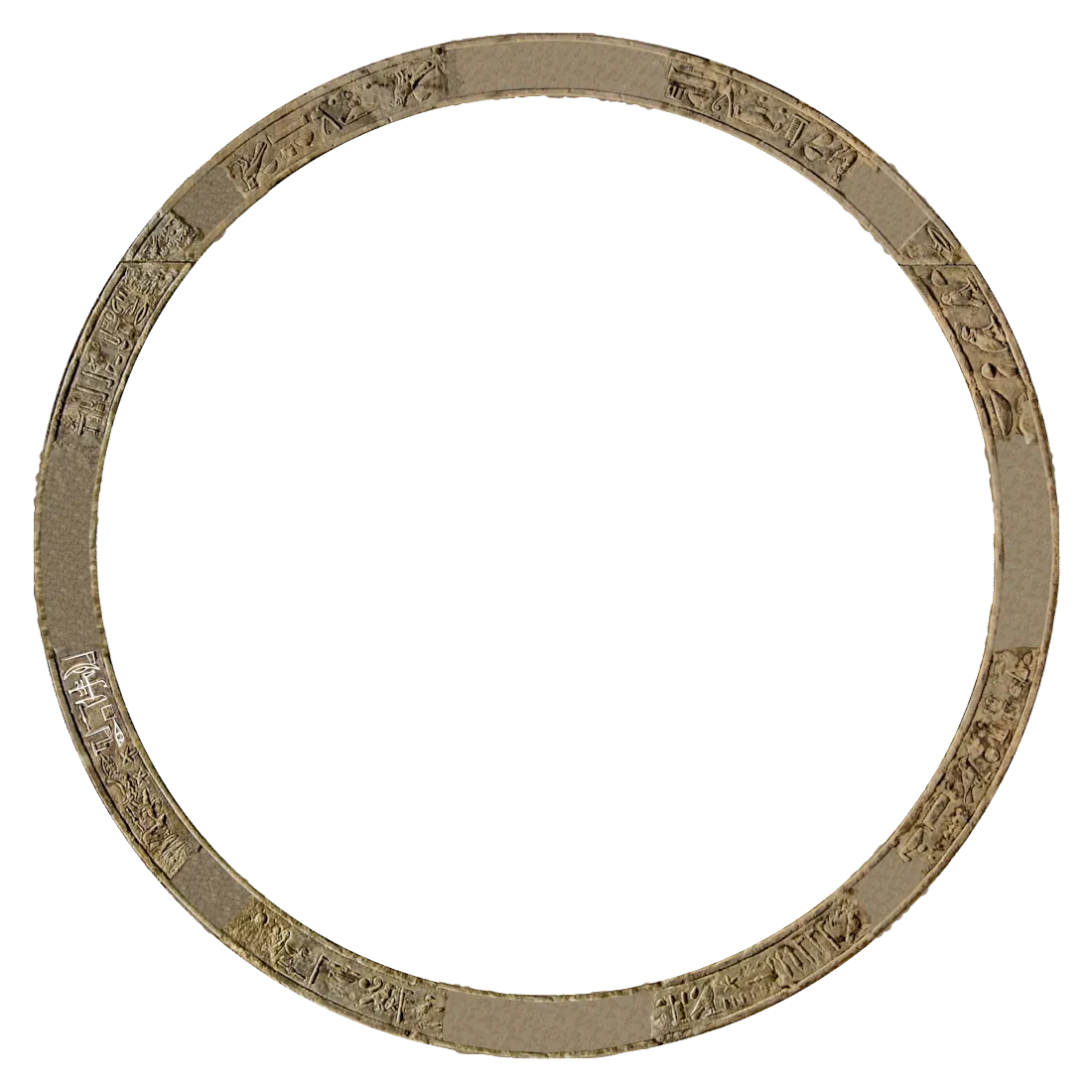
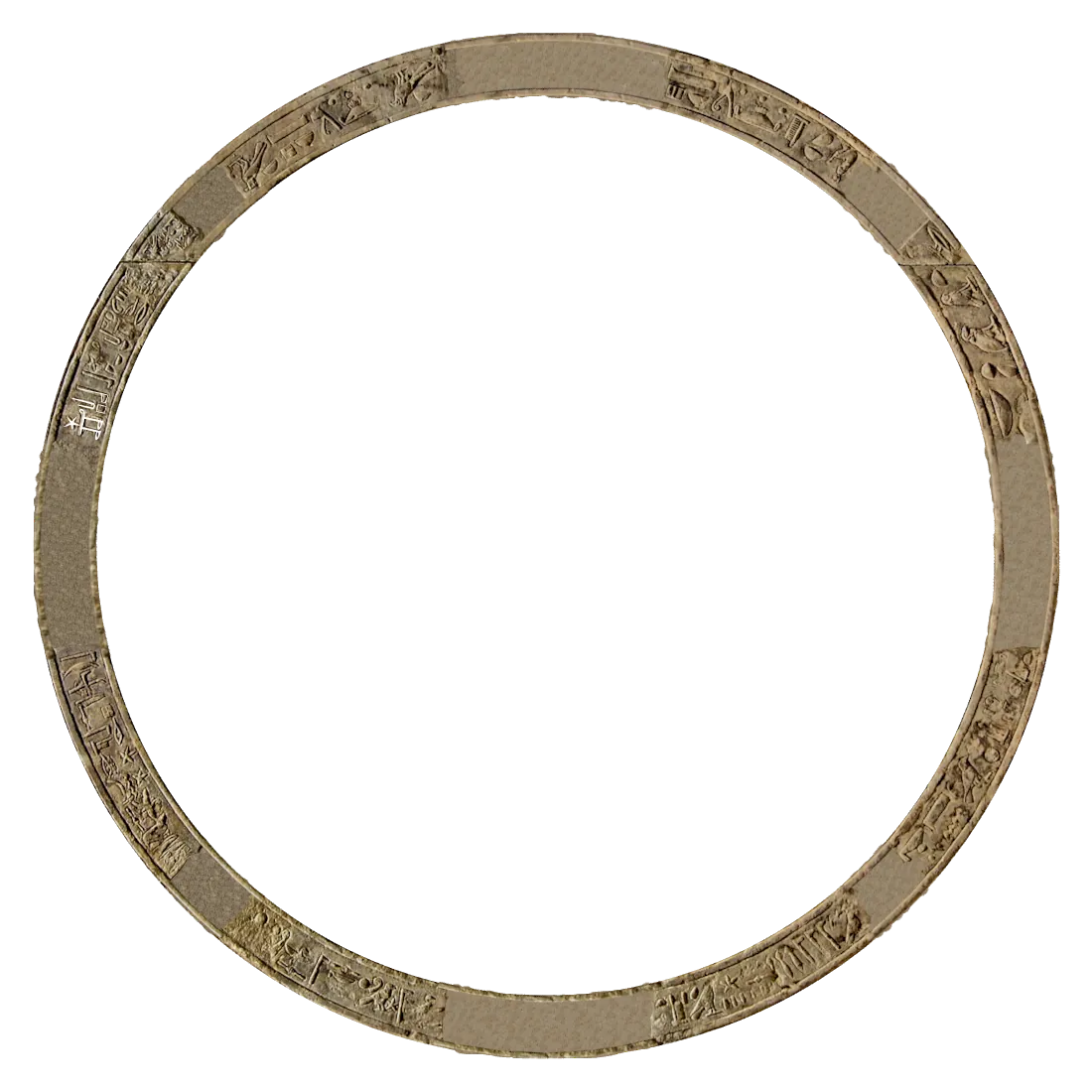
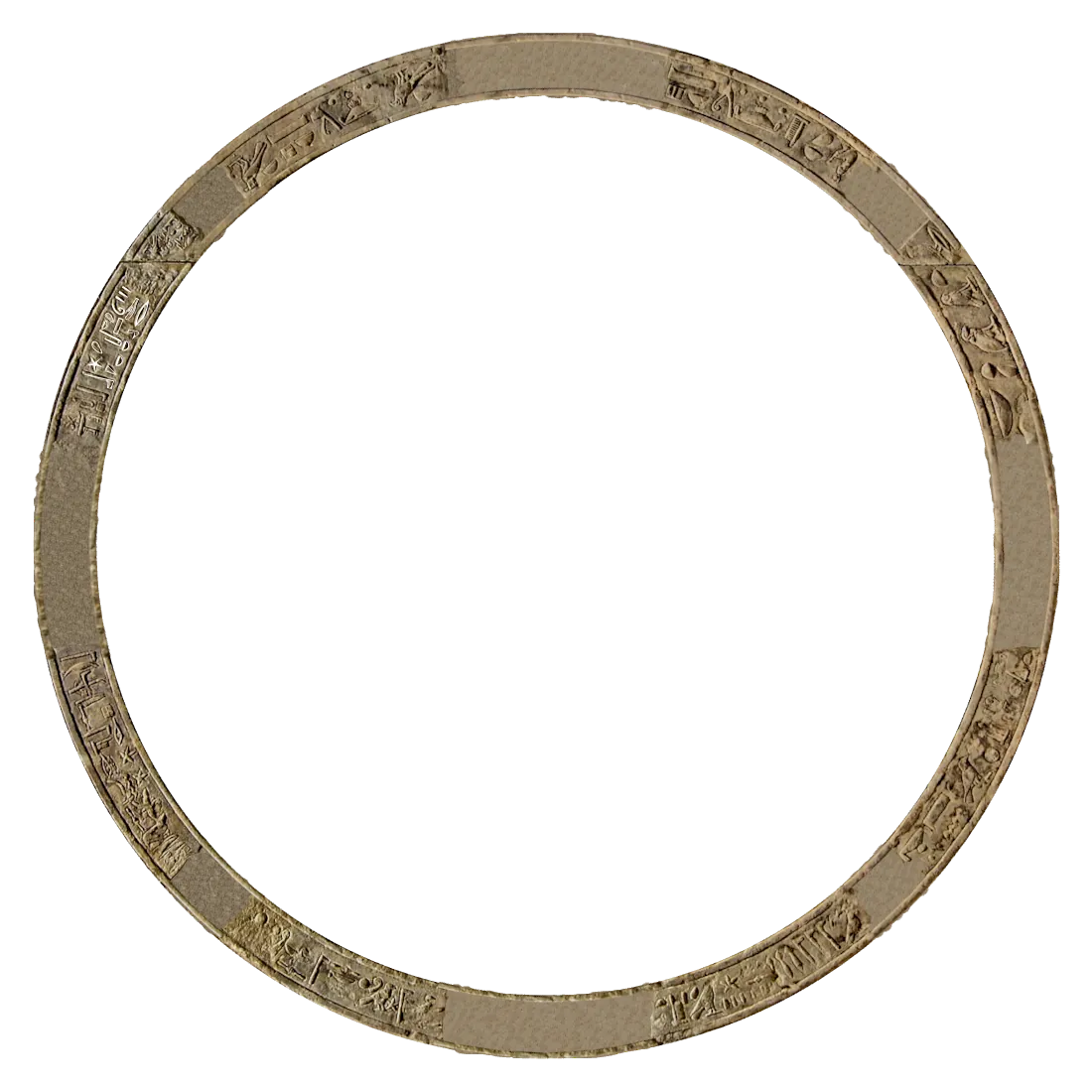
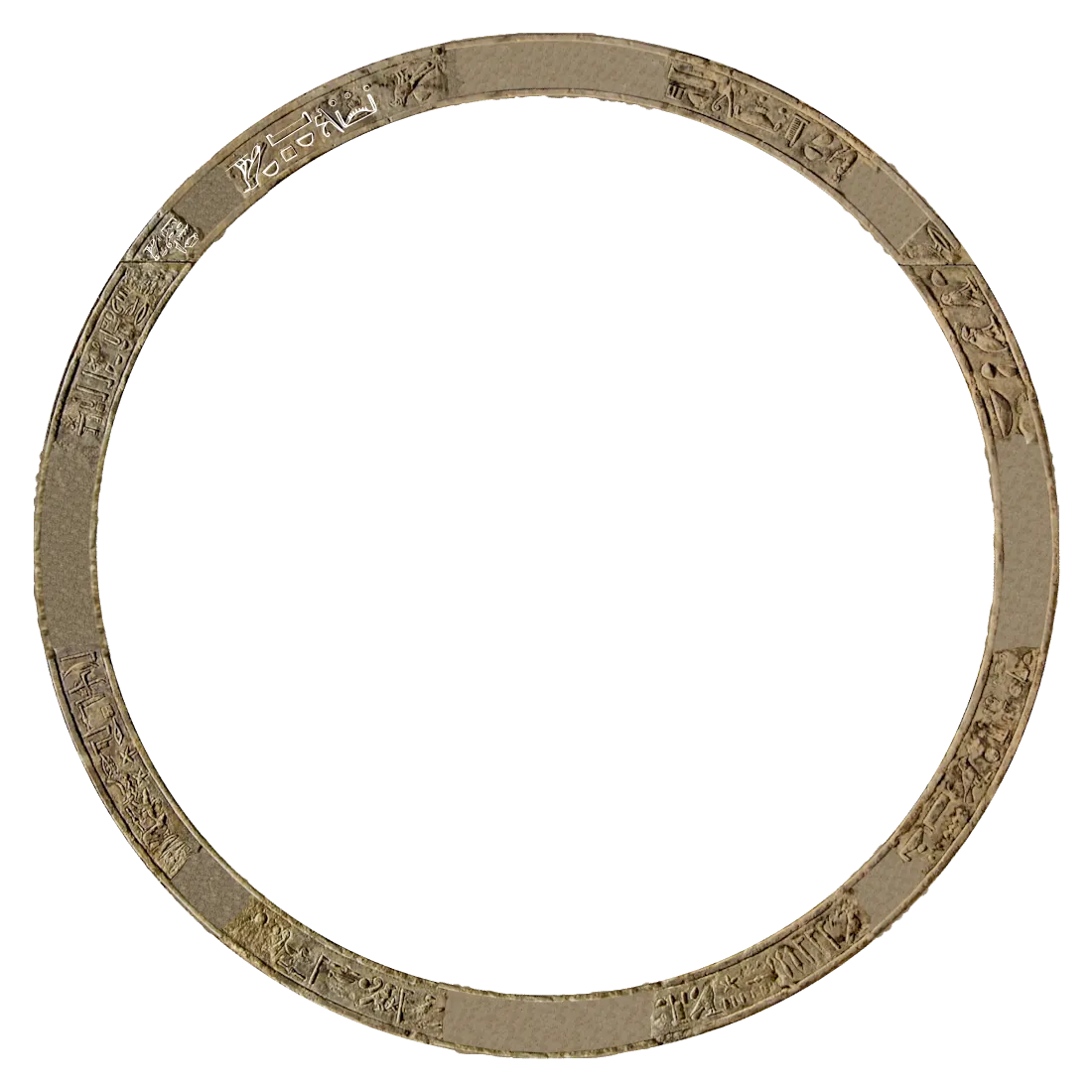
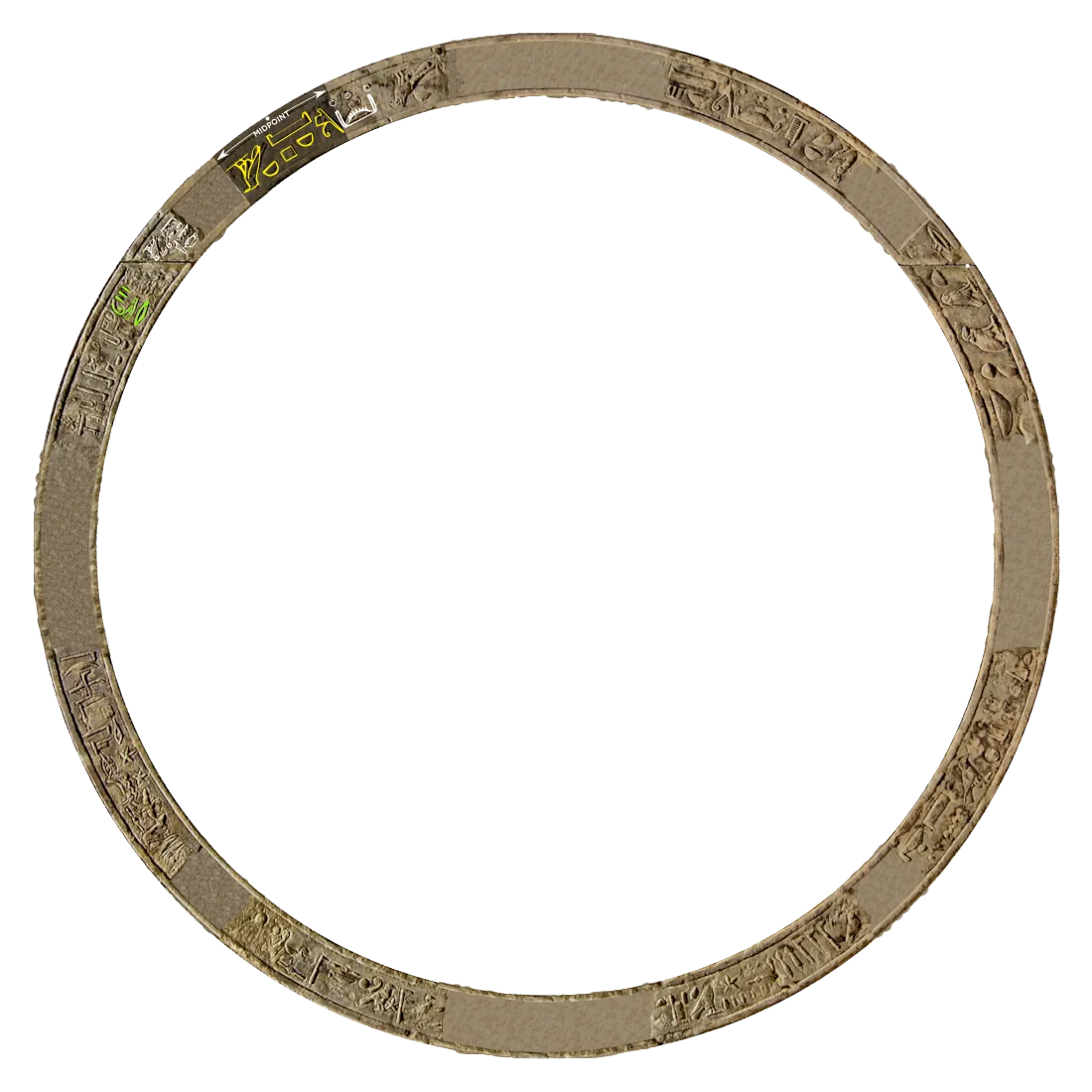
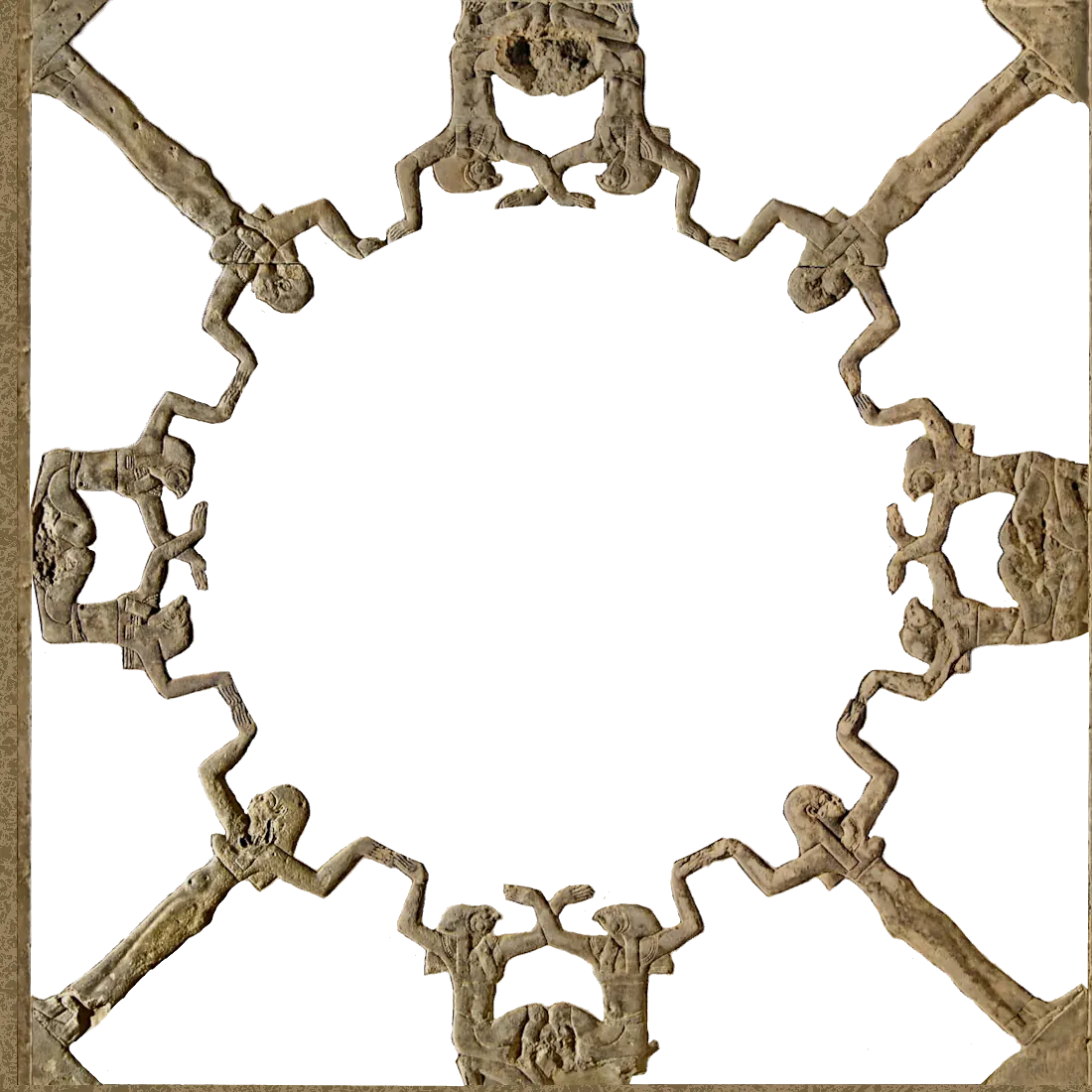
The image of the Dendera Zodiac on the right of this page has had no rotations applied to it and is in its initial state as you would be able to see it in the Louvre museum. The first step is to apply the 33+1/3° rotation that was shown on the previous page to the circular parts of the sculpture, this time highlighting phrase 2 on the hieroglyphs which translated to "The planet Venus is in charge". Click the following button to highlight this phrase, the God Sah (Orion) and the two celestial axes pinned to the outer ring.
The initial rotation can now be performed in an identical manner to previously by clicking the next button.
Note that only the last part of phrase 2 is now visible, that being the last hieroglyph group transliterated as "mistress", referring to the planet Venus as being "in charge".
What is now required is the modern astronomy positional data for the planets which can be found in software that NASA makes available on the internet. The NASA ephemeris that is required is named 'DE441' which gives accurate data for the planet systems of the Solar System over the time span being looked at here. The setup parameters that are passed to the software when referencing this ephemeris are those given in the hieroglyph phrases 5,6,7 and 8 which dictates that each planet system's barycenter is the celestial object being referenced, that the mass of the atmosphere is included in the calculations, and that light aberration is not taken into account. The output that is required from the software is the X,Y and Z coordinates of the planet's barycenter (the state vectors), and the reference plane to be used is the ICRF since it is the standard modern reference frame and which lies very close to the invariable plane of the solar system and therefore a rational choice to adopt.
The date at which the ephemeris table needs to be produced is that of the geometric winter solstice of the year 2729 BCE, which has the Julian date 724669.228769627 TDB. The NASA DE441 data for the inner planet systems of the solar system is shown in the table below.

Table 0 - NASA DE441 vector ephemeris data for the inner solar system planets at the geometric winter solstice of 2729 BCE
When plotting the planets' rotational positions on the Dendera Zodiac by calculating the angle from the X and Y coordinates, the distance to the planet from the Sun can also be drawn to scale on the diagram to show how the circular and nearly square sections of the sculpture have been designed. The first step in this process is to reduce the dimensions of the illustration so that the orbit of Mars can be seen, because it extends beyond the limits of the square carving.
The next step is to draw on the average orbital distance of the Earth onto the sculpture, this distance being the definition of one Astronomical Unit or 1AU which is the unit of measure used in table 0 for the planets' orbital distances. The circle representing this orbital distance is nominally defined in the sculpture as being the outer edge of the ring of stone on which the circular ring of hieroglyphs is located.
Because the Dendera Zodiac is a visualisation of the night sky looking upwards, the planets in the solar system rotate around the Sun in a clockwise direction, which is the opposite of the modern convention in which the the solar system is viewed from above The Sun's north pole and the planets rotate rotate anti-clockwise. The four inner planets of the solar system can be animated into their 2729 BCE geometric winter solstice position by clicking the following sequence of four buttons.
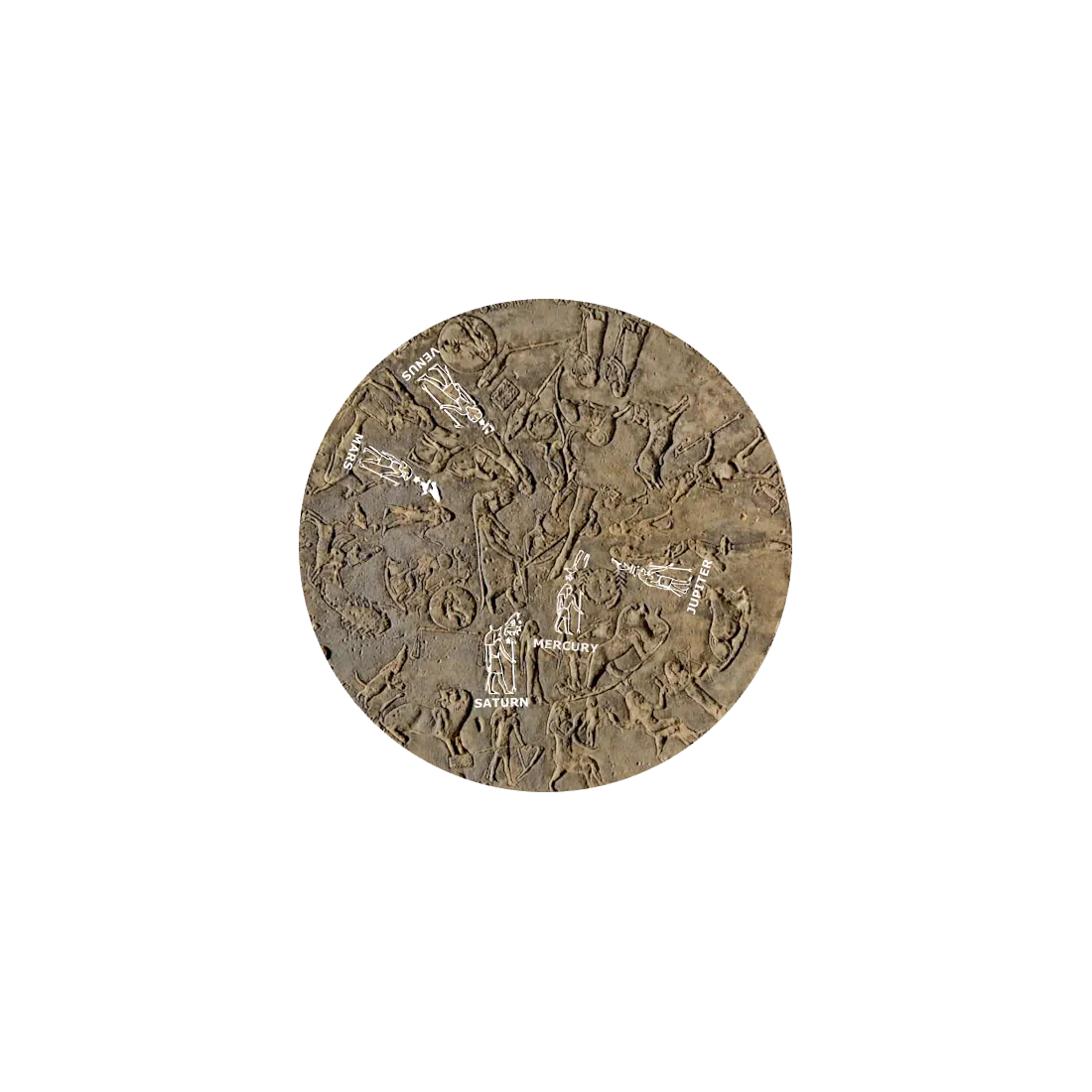
The resulting scale drawing of the inner solar system is exquisite. The average orbital radius of the Earth and the projected orbital radius at the time of the geometric winter solstice form the outer border of the hieroglyph ring. Mercury aligns with the God Sah's hat, the orbit of Venus defines the inner circular carving's perimeter and the orbit of Mars dictates the size of the outer square section of the sculpture. The Sun, Mercury, Venus and Mars are all just about in conjunction, exactly as is written in the hieroglyphs. What is remarkable is that this conjunction is with the Sun and, when viewed from the Earth, the other three inner planets would be small invisible dots spread across the daytime sky, as can be seen by looking at the location of the Earth in the illustration.
From what has been seen in the initial two pages of this work there is no point in studying any further into the design of the Dendera Zodiac from the perspective of our 'technologically advanced' civilisation looking at the work of a "primitive one", because it is already clear that the sculpture contains planet conjunctions that can only have been theoretically calculated from numerical astronomy data, planet orbital distances that are correct, along with a precise mechanical design of the stone rotations that could only have been conceptually designed, since the stones do not move.
If you then add to that list the fact that the Key from the Great Pyramid of Giza unlocks the dating mechanism for the Dendera Zodiac allowing the planet conjunctions to be revealed, then it can be stated without doubt that the Dendera Zodiac cannot possibly be a primitive stone carving of the night sky.
This Key artefact can be placed onto the knees of the falcon Gods on the right side of the Dendera Zodiac and fits to perfection, as can be seen by clicking the following button.
Illustration 1 - The Key, the knees of the falcon Gods on the right side of the image and the celestial axis line marked as a black line
The Key's asymmetric curved parts align to perfection with the identically asymmetric knee carvings, with the Key needing to be enlarged by a scaling factor of 2.56:1 in order for the two objects to be superimposed as shown in the illustration. The visual correlation between the Key's shape and the Dendera Zodiac knee carvings is overwhelmingly obvious and only occurs on this one set of knees, with the other three possible locations on the knees of the three other sets of falcon Gods giving misalignments.
The alignment of the Great Pyramid's Key artefact with the Dendera Zodiac Gods knees is a simple task to perform, but has significant implications to it. The stonemasons who carved the Dendera Zodiac must have had full knowledge of the Key's design, and as the Key was only quite recently found behind a sealed section of stonework in the Great Pyramid, the Pyramid and the Zodiac must by contemporary. The Dendera Zodiac can therefore be dated to the epoch of the Great Pyramid circa 2700 B.C.E, which is known with certainty from radiocarbon dating. The second significant implication concerns the design, construction and functionality of the shaft in the Great Pyramid where the Key artefact was hidden.
It has been determined with certainty that the lower northern shaft of the Great Pyramid is also a sophisticated geometry puzzle which, when solved, gives a precise value of the axial tilt of the Earth of 23.996068848986106°. The date and time at which this axial tilt value occurred can be computed using an astronomy formula known as 'Laskar's axial tilt formula' and then that date can be looked up on NASA's high precision long term ephemeris tables to determine that the event being presented in the Great Pyramid is that of the "geometric winter solstice" on January 14th 2729 BCE at 17:29:26 TDB. The full analysis of that mathematical derivation can be found here.
It is important to define what is meant by "geometric winter solstice", because it is not a standard term that is used in classical astronomy. It is the moment in time when the Earth's north pole position angle, when viewed from The Sun, is zero degrees i.e. the north pole is pointing directly away from The Sun. This is not the same as the classical definition of the Winter Solstice which is specified as being the moment in time when the geocentric right ascension of The Sun is 270°. The classical Winter Solstice occurred on January 11th 2729 BCE at 10:36:47 TDB.
The Key is therefore a representation of the date of the geometric winter solstice and provides a precise time and date mechanism for determining when the positions of the celestial bodies on the carving were recorded.
By placing the Key onto the knees of the Gods on the right side of the carving, and because the vernal equinox has already been determined as being at the top of the carving and the geometric winter solstice is now known to be on the right, the four equinox and solstice locations can correctly be added to the illustration.
If you look at the relative position of the equinoxes and solstices you can see that the passage of time in this reference frame is anti-clockwise and contradicts that which was established on the previous page when the hieroglyph carvings of the zodiac were analysed. This is a deliberate and highly significant part of the puzzle's design: in realm of the Gods on the outer square frame, time is running backwards.
The date of this geometric winter solstice from the Great Pyramid, January 14th 2729 BCE 17:29:26 TDB, can be verified as being correct by solving the next stage of the Dendera Zodiac puzzle. In the hieroglyph instructions that were translated on the previous page it is clearly stated that there are three planets in conjunction on the sculpture (phrase 4) and also that the planet Venus is located in the Orion constellation (phrase 5). Therefore if the positions of the planets are read from the NASA DE441 ephemeris tables for this date, they must show the three planet conjunction and the planet Venus must end up being positioned in line with the God Sah, the God linked with the Orion constellation, on the inner stone ring of hieroglyphs. If a correlation between the modern data and the ancient data from the Great Pyramid and the Denderda Zodiac is found during this analysis then the date from the puzzles in both of the buildings can be declared as having been correctly solved.
The image of the Dendera Zodiac on the right of this page has had no rotations applied to it and is in its initial state as you would be able to see it in the Louvre museum. The first step is to apply the 33+1/3° rotation that was shown on the previous page to the circular parts of the sculpture, this time highlighting phrase 2 on the hieroglyphs which translated to "The planet Venus is in charge". Click the following button to highlight this phrase, the God Sah (Orion) and the two celestial axes pinned to the outer ring.
The initial rotation can now be performed in an identical manner to previously by clicking the next button.
Note that only the last part of phrase 2 is now visible, that being the last hieroglyph group transliterated as "mistress", referring to the planet Venus as being "in charge".
What is now required is the modern astronomy positional data for the planets which can be found in software that NASA makes available on the internet. The NASA ephemeris that is required is named 'DE441' which gives accurate data for the planet systems of the Solar System over the time span being looked at here. The setup parameters that are passed to the software when referencing this ephemeris are those given in the hieroglyph phrases 5,6,7 and 8 which dictates that each planet system's barycenter is the celestial object being referenced, that the mass of the atmosphere is included in the calculations, and that light aberration is not taken into account. The output that is required from the software is the X,Y and Z coordinates of the planet's barycenter (the state vectors), and the reference plane to be used is the ICRF since it is the standard modern reference frame and which lies very close to the invariable plane of the solar system and therefore a rational choice to adopt.
The date at which the ephemeris table needs to be produced is that of the geometric winter solstice of the year 2729 BCE, which has the Julian date 724669.228769627 TDB. The NASA DE441 data for the inner planet systems of the solar system is shown in the table below.
When plotting the planets' rotational positions on the Dendera Zodiac by calculating the angle from the X and Y coordinates, the distance to the planet from the Sun can also be drawn to scale on the diagram to show how the circular and nearly square sections of the sculpture have been designed. The first step in this process is to reduce the dimensions of the illustration so that the orbit of Mars can be seen, because it extends beyond the limits of the square carving.
The next step is to draw on the average orbital distance of the Earth onto the sculpture, this distance being the definition of one Astronomical Unit or 1AU which is the unit of measure used in table 0 for the planets' orbital distances. The circle representing this orbital distance is nominally defined in the sculpture as being the outer edge of the ring of stone on which the circular ring of hieroglyphs is located.
Because the Dendera Zodiac is a visualisation of the night sky looking upwards, the planets in the solar system rotate around the Sun in a clockwise direction, which is the opposite of the modern convention in which the the solar system is viewed from above The Sun's north pole and the planets rotate rotate anti-clockwise. The four inner planets of the solar system can be animated into their 2729 BCE geometric winter solstice position by clicking the following sequence of four buttons.
The resulting scale drawing of the inner solar system is exquisite. The average orbital radius of the Earth and the projected orbital radius at the time of the geometric winter solstice form the outer border of the hieroglyph ring. Mercury aligns with the God Sah's hat, the orbit of Venus defines the inner circular carving's perimeter and the orbit of Mars dictates the size of the outer square section of the sculpture. The Sun, Mercury, Venus and Mars are all just about in conjunction, exactly as is written in the hieroglyphs. What is remarkable is that this conjunction is with the Sun and, when viewed from the Earth, the other three inner planets would be small invisible dots spread across the daytime sky, as can be seen by looking at the location of the Earth in the illustration.
From what has been seen in the initial two pages of this work there is no point in studying any further into the design of the Dendera Zodiac from the perspective of our 'technologically advanced' civilisation looking at the work of a "primitive one", because it is already clear that the sculpture contains planet conjunctions that can only have been theoretically calculated from numerical astronomy data, planet orbital distances that are correct, along with a precise mechanical design of the stone rotations that could only have been conceptually designed, since the stones do not move.
If you then add to that list the fact that the Key from the Great Pyramid of Giza unlocks the dating mechanism for the Dendera Zodiac allowing the planet conjunctions to be revealed, then it can be stated without doubt that the Dendera Zodiac cannot possibly be a primitive stone carving of the night sky.
NEXT PAGE - THE MOON